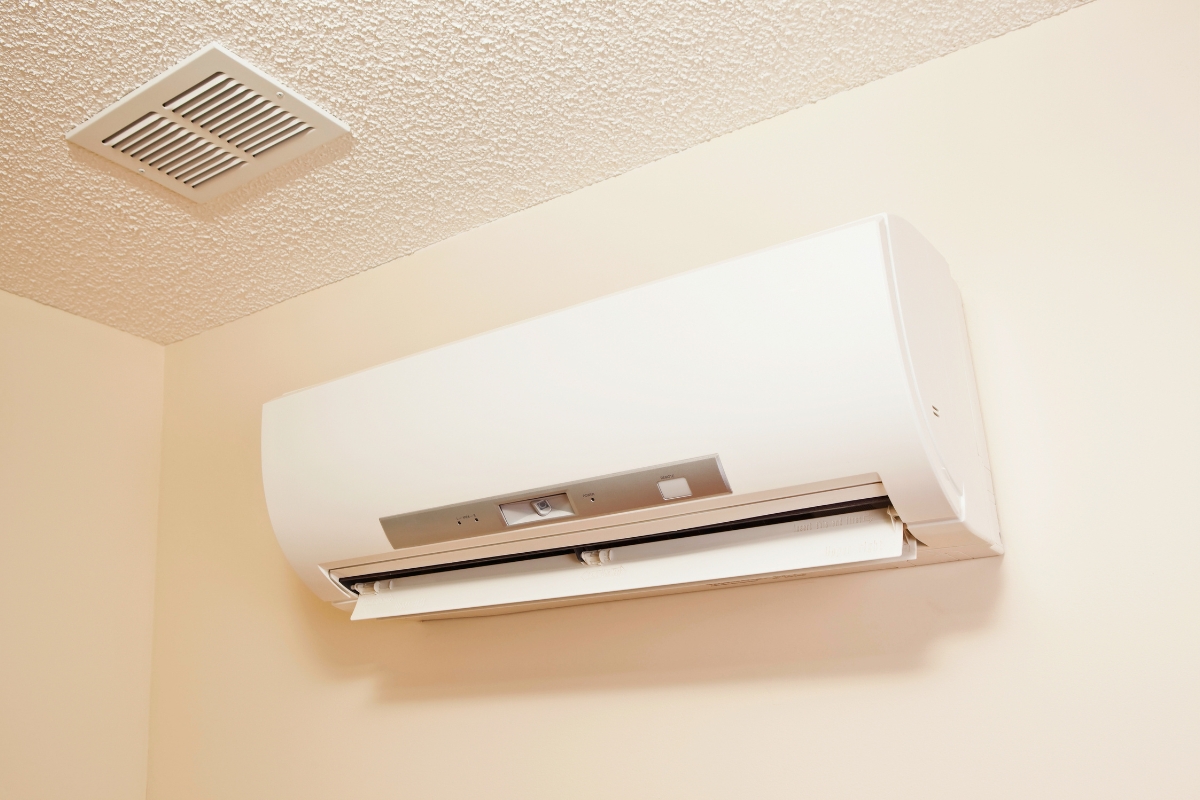
Looking for a better way to heat and cool your home? If you’re tired of window units that block your view or sky-high energy bills from an inefficient central HVAC system, you’re not alone. Many homeowners are seeking a more flexible, efficient solution. Mini split systems are a popular alternative, offering room-by-room temperature control and lower energy costs. But do they deliver on that promise? So, are mini splits worth it? The answer depends on your home’s layout, climate, budget, and whether you value zoned control over a lower upfront cost.
In this article, we’ll cover everything you need to know about mini split systems. First, we’ll explore how they work, then their pros and cons, and what they cost. You’ll also learn if they can save you money. By the end, you’ll have a clear picture of whether a mini split is the right fit for your home.
What Is A Mini Split And How Does It Work?
What Is A Mini Split?
A mini split is both a ductless heating and cooling system that supplies conditioned air directly into individual rooms or zones. Unlike traditional HVAC systems, which use ductwork to distribute air, mini splits provide direct heating or cooling where it’s needed.
Every mini split system has two primary components:
- An outdoor unit (the condenser), which contains the compressor and circulates refrigerant.
- One or more indoor air-handling units (the evaporators), which house the refrigerant tubing, suction tubing, and condensate drain.
A single outdoor unit can link to multiple indoor units. This setup lets you control the temperature in different areas of your home.
The indoor and outdoor components connect through a small hole in the wall. This opening is typically only about three inches wide. Because of that, installation is much less invasive than adding new ductwork to a home.

How Mini Split Systems Operate
Mini splits cool a room by pulling warm indoor air over refrigerant-filled coils. The system then circulates the cooled air back into the room. The refrigerant soaks up the heat and transfers it outdoors, where the condenser releases it.
When heating is needed, the process reverses, allowing the system to pull out heat from outdoor air and move it indoors.
Two features distinguish mini splits from many traditional systems:
- Zoning capability. Every indoor unit has its own temperature setting. This allows for personalized comfort throughout the home.
- Inverter technology. The compressor doesn’t just cycle on and off at full power. Instead, it adjusts its output to match changing conditions. This helps maintain consistent temperatures and improves efficiency.
Are Mini Splits Worth It? Factors To Consider Before Investing
Who Benefits Most From Mini Split Systems?
Mini splits tend to provide the greatest value in specific situations.
- Older homes without ductwork. Retrofitting an older house with new ductwork can be disruptive and expensive. Mini splits offer an effective alternative that avoids major renovations.
- Home additions and converted spaces. Garages, sunrooms, and finished basements are often not connected to the existing HVAC system. The same goes for attic conversions and bonus rooms. Mini splits make it easy to keep these areas comfortable without altering the home’s primary system.
- Households seeking individualized comfort. Do family members constantly disagree over the thermostat? Do certain rooms never seem comfortable? Mini splits allow different areas to maintain different temperatures.
Situations Where Mini Splits May Not Be The Best Choice
Mini splits aren’t the ideal solution for every household. They may be a weaker fit in these situations:
- If your home has efficient, well-sealed ductwork, you might not need mini splits. This is especially true if you have a newer central HVAC system. In this case, the extra benefits of a mini split system may not justify the expense.
- Budget is another important consideration. Mini splits can deliver long-term value, but their upfront cost is often higher than conventional alternatives. This tradeoff is especially important for larger, multi-zone systems.
Pros Of Mini Split Systems
High Energy Efficiency And Lower Utility Bills
Mini splits are widely recognized for their efficiency. Mini splits don’t experience energy loss from leaky or poorly insulated ducts. Their inverter-driven compressors also adjust output based on demand. Because of this, they often consume less energy than other systems. This can help reduce monthly utility costs.
Zoned Heating And Cooling
Each indoor unit serves a specific zone. This enables occupants to set different temperatures in different rooms. You can focus on comfort where it’s needed most. You can also reduce energy use in empty spaces. This improves both comfort and efficiency.
Heating And Cooling In One System
Many mini splits function as heat pumps, providing year-round climate control through a single system. This versatility can let go of the need for separate seasonal equipment and simplify home comfort management.
No Ductwork Required
One of the most significant advantages of mini splits is their ability to operate without ducts. Duct installation can be disruptive. Mini splits avoid this, making them great for older homes, renovations, and additions.
Potential Long-Term Savings
Mini splits usually have a higher upfront cost. However, lower energy consumption can lead to long-term savings. You can also save money by only conditioning the rooms you’re using. The amount saved ultimately depends on factors such as usage habits, energy rates, the number of zones in use, and overall home efficiency.
Flexible Installation Options
Mini split indoor units come in a variety of styles, including:
- Wall-mounted units
- Floor-standing units
- Recessed ceiling cassettes
Their flexibility allows them to adapt to many different layouts and room designs. Unlike window units, mini splits preserve natural light. They don’t require an open window. This improves both the look and security of your home.
Quiet Operation
Mini splits are engineered for quiet operation. The indoor units produce minimal noise while keeping you comfortable. Many homeowners find them much quieter than older, traditional window units.
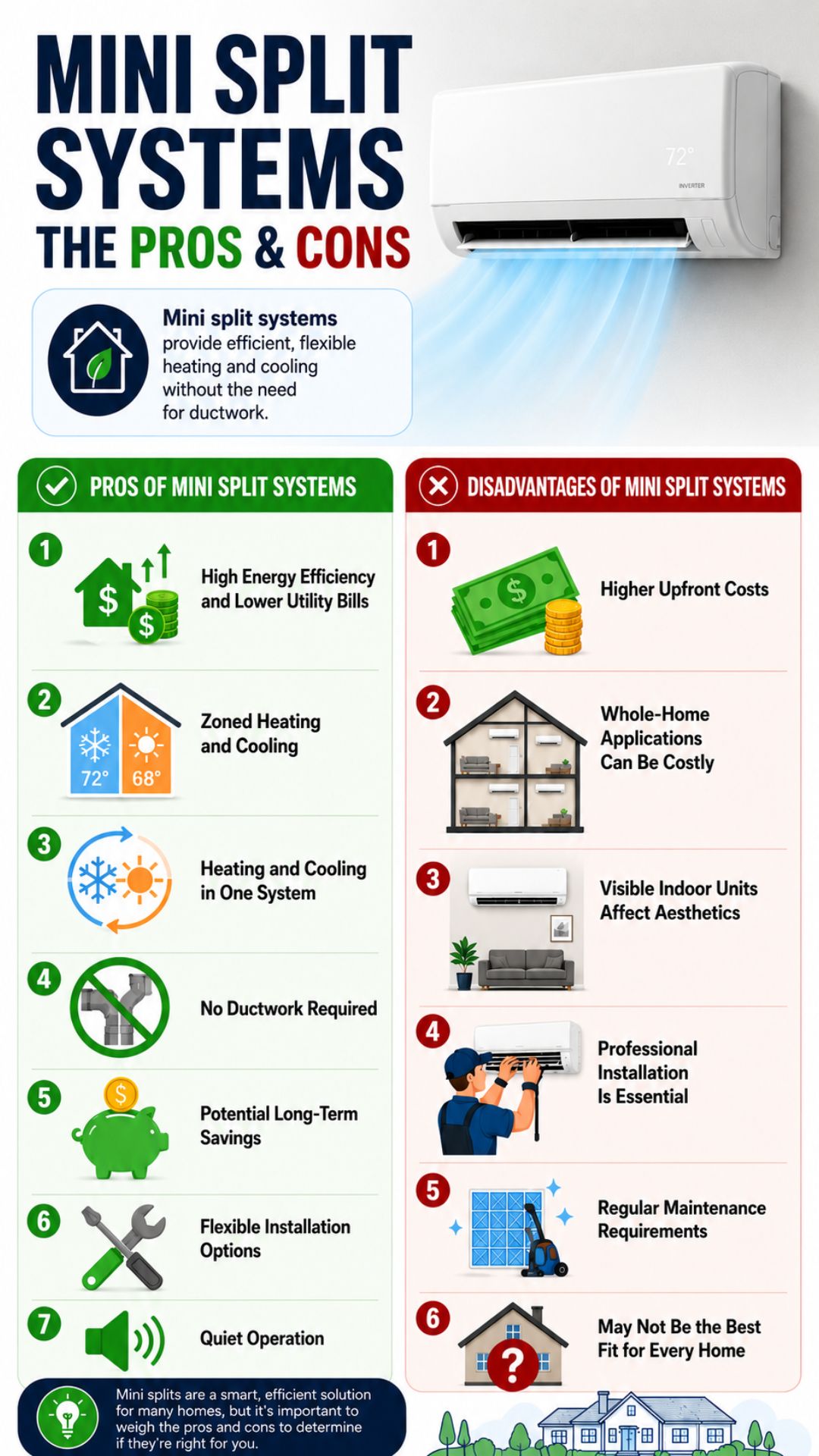
Disadvantages Of Mini Split Systems
Higher Upfront Costs
Ductless systems often require a larger initial investment than some traditional HVAC options. But that higher upfront cost may be balanced by other savings over time. Your final cost depends on several factors, including:
- The number of zones being conditioned
- System capacity
- Efficiency rating
- Installation complexity
A single-room application is generally more affordable. A whole-home configuration costs more. Larger, multi-zone systems represent a more substantial investment.
Visible Indoor Units Affect Aesthetics
Unlike central systems that hide behind vents and grilles, mini split air handlers remain visible within the room. Modern units are compact and sleek. Still, some homeowners prefer the concealed look of traditional HVAC systems.
Professional Installation Is Essential
Mini splits need to be sized correctly. They require proper refrigerant handling and electrical expertise. The installation process must be done carefully. Professional installation ensures the system works well. It also protects the manufacturer’s warranty. This reduces the risk of expensive problems later on.
Regular Maintenance Requirements
Most mini splits use reusable filters. These filters need regular cleaning, often every month. This helps maintain efficiency and good air quality. While this maintenance is relatively simple, consistency is important for long-term performance.
May Not Be The Best Fit For Every Home
Mini splits perform well in many environments. However, extreme temperatures can affect their efficiency. In very cold climates, you might need a cold-climate model. Supplemental heating may also be necessary during severe weather. Likewise, prolonged periods of intense heat can place greater demands on the system.
Cost Breakdown: How Much Do Mini Splits Cost?
Initial Purchase And Installation Costs
The price of a mini split system can vary. Several factors influence the cost, including capacity, efficiency, installation requirements, and the number of indoor units needed.
In Florida, a professionally installed single-zone mini split system typically ranges from $1,800 to $5,800. Multi-zone systems cost between $6,500 and $11,000. Larger, whole-home systems often exceed $12,000. The final price depends on the number of indoor units and project complexity.
Florida homeowners may see slightly higher prices than the national average. This is due to permit requirements, coastal building codes, and high seasonal demand for HVAC labor. While professional installation adds to the cost, it’s crucial because proper sizing and installation support long-term reliability and efficiency.
Mini splits aren’t automatically more expensive than forced-air systems. In homes without existing ductwork, they can sometimes be the more economical option overall, especially when you factor in duct installation costs.
Operating Costs And Monthly Energy Use
Mini splits use inverter technology. This allows them to adjust power consumption based on the room’s heating or cooling needs. As a result, unnecessary electricity use is minimized.
Your actual monthly costs depend on several factors, including:
- The number of zones in use
- How often do you run the system?
- Local electricity rates
- Your home’s insulation and overall efficiency
Operating costs can vary widely in Florida because of the state’s long cooling season. Homeowners using mini splits as their main cooling system may see higher electricity bills in the summer, but zoning can help reduce costs by cooling only the rooms you’re using. That tradeoff can make the system more efficient overall.
Ultimately, the cost to run a mini split depends more on usage habits and local energy rates than on the system itself.
Long-Term Savings: Do Mini Splits Pay For Themselves?
A mini split’s efficiency can lower your monthly utility costs. Homeowners can also take advantage of zoned operation to avoid heating or cooling unused spaces. Mini splits typically cost more upfront than traditional HVAC systems. However, they can provide a solid return on investment over time. This is especially true for homes without existing ductwork.
Factors That Influence Long-Term Savings
Several factors affect the return on your investment:
- Climate. Mini splits operate at peak efficiency in moderate climates. Lengthy periods of extreme heat or cold may reduce potential savings.
- System sizing. Proper sizing is essential. A correctly sized system operates efficiently. An excessively large or undersized unit can increase energy use. It can also compromise comfort.
- Home Efficiency. Well-insulated homes retain conditioned air longer. Effective air sealing is key. This maximizes the benefits of any heating and cooling system.
- Usage Habits. Households that manage temperatures see more savings. Limiting conditioning in unused areas also helps. These thoughtful habits lead to meaningful savings over time.
Are Mini Splits Good For Heating?
Mini splits utilize heat pump technology to convey warmth from outdoor air into the home. Newer models continue to perform efficiently in colder conditions, making them a practical heating option in many climates.
Homeowners in regions with severe winters may need a cold-climate model. They might also need supplemental heating during the coldest periods. Mini splits shift heat rather than generating it directly. Because of this, they can be more energy-efficient than systems like baseboard heaters and some traditional heating methods.
Mini Splits Vs. Traditional HVAC: Which Is The Better Investment?
Mini Splits Vs. Central Air Systems
Central air systems distribute conditioned air through ductwork to maintain consistent temperatures throughout the home. Mini splits provide targeted comfort by allowing independent temperature control in different areas.
Mini splits are a less invasive and more efficient option for homes without existing ductwork. However, it might be more cost-effective to keep a newer, well-maintained central system. Ultimately, the better investment depends on your home’s infrastructure, comfort preferences, and budget.
Mini Splits Vs. Window Units
Window units are inexpensive and straightforward to install, but they typically cool only a single room and can be louder during operation.
Mini splits offer greater efficiency, quieter performance, improved aesthetics, and enhanced security because they don’t require an open window. Many models also provide both heating and cooling capabilities, increasing their versatility.
Frequently Asked Questions
Are mini splits worth it for whole-home heating and cooling?
Yes. Mini splits can serve an entire home by connecting multiple indoor units to one or more outdoor units. They are incredibly beneficial in homes without existing ductwork. They’re also great where extending ducts isn’t practical. Multi-zone systems do require a larger investment. However, many homeowners find the comfort and flexibility justify the cost.
How much does a mini split cost to install, and is it worth the upfront price?
A ductless system usually costs about 30% more than a forced-air system. Pricing depends on the number of zones, system size, and efficiency rating. However, many homeowners find the investment is worth it. They enjoy the energy efficiency, flexible installation, and personalized comfort.
How much can a mini split save on monthly energy bills?
Savings vary depending on electricity rates, usage patterns, and home efficiency. Homeowners who condition only occupied spaces are often better positioned to maximize those savings.
Do mini splits work well in cold climates?
Modern mini split heat pumps perform well in many colder regions. In areas with severe winters, choose a cold-climate model. You may also need supplemental heating for extreme conditions to maintain comfort.
What happens if a mini split is oversized or undersized?
Improper sizing affects both efficiency and comfort. An oversized system may cycle on and off too often. This leads to inefficient operation and poor humidity control. A small system will struggle to heat or cool your space properly. A professional load calculation ensures the system is the right size for your home.
How quiet are mini splits compared to central air?
Mini splits are designed for quiet operation. Many homeowners find indoor units noticeably quieter than older systems while still providing consistent comfort.

Final Verdict: Are Mini Splits Worth It For Your Home?
So, are mini splits worth it? They provide a compelling mix of energy efficiency, flexible comfort, and versatile installation. Although the upfront cost is higher and they need professional installation, long-term savings and available incentives can make them a great value. The right option will depend on your home’s layout, climate, and comfort needs. An HVAC professional can help you find the best solution.
Ready to find out if a mini split is right for your home or business? Fahrenheit AC is a trusted, family-owned HVAC provider with over 25 years of experience. Our skilled technicians offer expert air conditioning and heating solutions to keep homes and businesses cozy. With 24/7 emergency service and honest, upfront pricing, Fahrenheit AC is here to help. Reach out today!