
If you’ve ever had your air conditioner serviced, you’ve likely heard the terms “Freon” and “refrigerant.” While often used as if they mean the same thing, these terms are not the same. Understanding the difference in this refrigerant vs Freon comparison can help you make better decisions regarding AC repairs, maintenance, and upgrades. Both terms refer to the cooling substance in your air conditioner, but knowing the difference is key to managing your system effectively.
In this article, we’ll cover the key differences between refrigerant and Freon. We’ll also discuss why refrigerants have evolved and what homeowners should know about today’s AC systems. Read on to learn the key takeaways for becoming a more informed homeowner and asking the right questions about your AC system.
Refrigerant vs Freon at a Glance
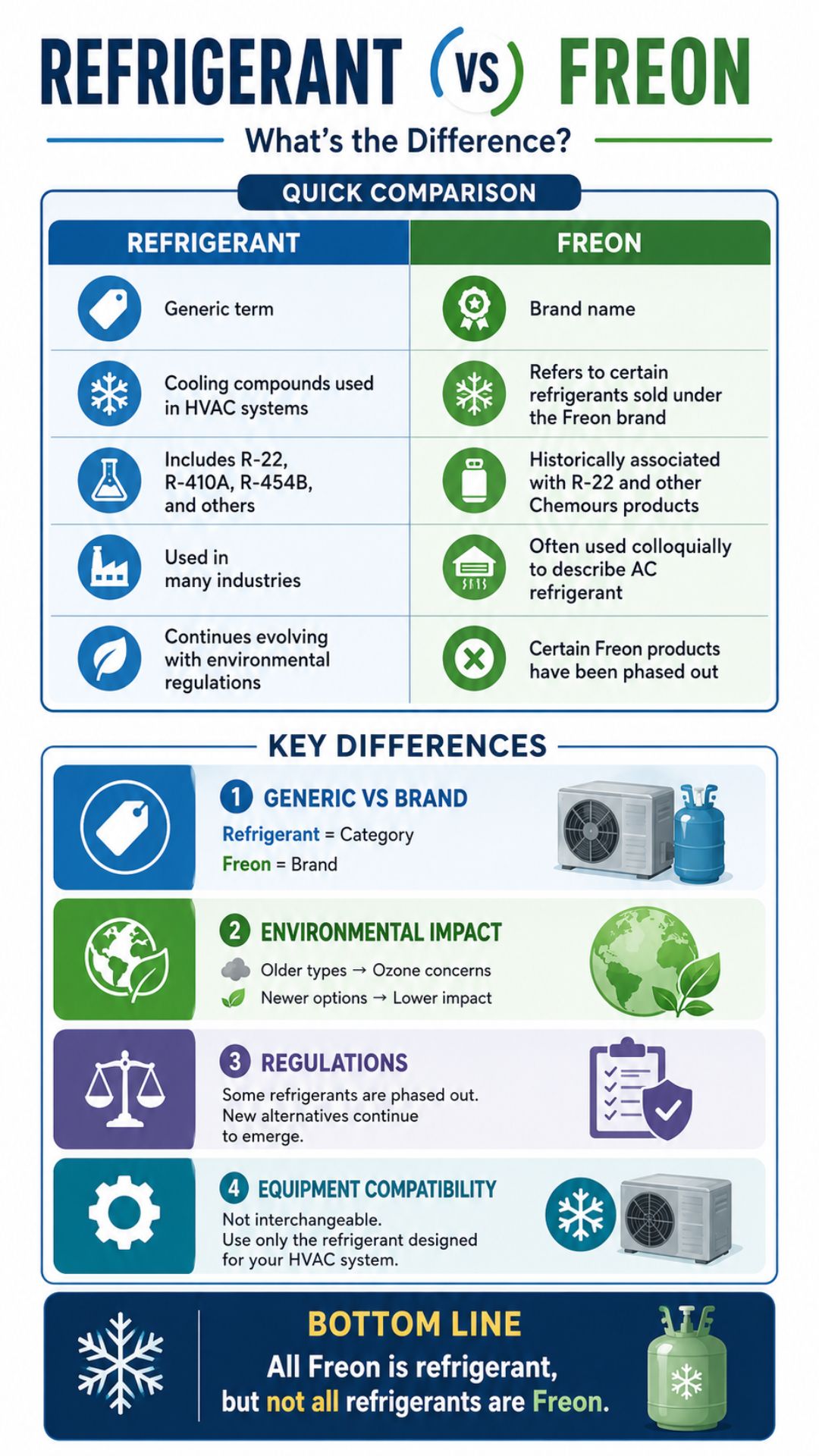
Refrigerant is the general term for the chemical compound in an HVAC system. It circulates to absorb and release heat. Freon, however, is a brand name for specific refrigerants manufactured under the Freon label. In simple terms, all Freon products are refrigerants, but not all refrigerants are Freon.
Why Do People Use the Terms Interchangeably?
For decades, R-22 Freon was one of the most common refrigerants used in residential air conditioners. Because it dominated the market for so long, many homeowners began referring to any refrigerant as “Freon.” Think of how some people use brand names like “Kleenex” for tissues or “Band-Aid” for adhesive bandages, and the habit becomes easier to understand.
This distinction may seem minor, but it’s important. It matters when you discuss repairs, replacements, and regulations.
What Is a Refrigerant?
Refrigerant is a specialized chemical compound designed to transfer heat. It circulates through your air conditioning system, shifting heat from inside your home and releasing it outdoors. Without refrigerant, your AC system can’t cool your home.
Why Refrigerant Is Essential for HVAC Systems
Refrigerant is the backbone of the cooling process. It enables:
- Effective heat transfer
- Consistent indoor temperatures
- Efficient energy use
- Reliable system performance
- Enhanced occupant comfort
Even a well-maintained AC system can’t operate without the right amount and type of refrigerant, which is why proper levels matter.
How Does Refrigerant Work in an Air Conditioner?
Refrigerant cycles through the system to move heat from indoors to outdoors, and each step supports that transfer.
- Evaporation and heat absorption. Inside the evaporator coil, the refrigerant absorbs heat. This heat comes from your home’s indoor air. The refrigerant then evaporates into a gas.
- Compression and pressurization. The compressor increases the refrigerant’s pressure and temperature. This prepares it to release heat outdoors.
- Condensation and heat release. The hot refrigerant moves through the condenser coil, where outdoor air removes the heat. The refrigerant condenses back into a liquid.
- Expansion and repeating the cycle. An expansion device lowers the refrigerant’s pressure and temperature. It then returns to the evaporator coil, and the cycle repeats.
Why Proper Refrigerant Levels Matter
A properly charged system helps maintain:
- Consistent cooling performance
- Better humidity control
- Efficient energy use
- Reduced strain on system components
Low refrigerant levels can negatively affect comfort, efficiency, and equipment longevity, so proper charging matters.
What is Freon?
Freon is a trademarked brand name historically used for a variety of refrigerant products. It does not describe the cooling process itself, which is similar to how people call all facial tissues “Kleenex,” even though Kleenex is a specific brand.
The History of Freon
DuPont introduced Freon during the early development of modern refrigeration, and the brand became widely recognized. It later became associated with Chemours following corporate restructuring.
Freon products improved refrigeration safety. For many years, they were a safer alternative to earlier refrigerants that posed significant risks.
Refrigerants Sold Under the Freon Name
Several refrigerants have carried the Freon name, including:
- R-22
- R-12
- R-502
- Other chlorofluorocarbons (CFCs) and hydrochlorofluorocarbons (HCFCs) formulations
Among homeowners, R-22 remains the refrigerant most associated with the Freon name.
Refrigerant vs Freon: Key Differences
Generic Term vs Brand Name
The biggest difference is straightforward:
- Refrigerant refers to the category.
- Freon refers to specific branded products within that category.
Environmental Impact
Different refrigerants have varying environmental effects. Older, chlorine-based refrigerants damage the ozone layer, while newer alternatives have less environmental impact and are also designed to maintain cooling efficiency.
Equipment Compatibility
Not all refrigerants are interchangeable. Engineers design HVAC systems for specific refrigerant types, operating pressures, and components. Using the wrong refrigerant can damage equipment and reduce efficiency.
Availability and Regulations
Federal regulations determine which refrigerants manufacturers can produce and sell. Some older refrigerants are no longer produced, while newer options continue entering the market. Availability often depends on the age and design of your HVAC system.
Why Is Freon Being Phased Out?
Understanding R-22 Refrigerant
R-22 was widely used in residential air conditioners for decades. However, researchers discovered that HCFC refrigerants contribute to ozone layer depletion, which led to international efforts to cut their production.
Environmental Concerns
R-22 contains chlorine, which can damage the Earth’s protective ozone layer when discharged into the atmosphere. Reducing reliance on ozone-depleting substances helps support environmental protection initiatives.
The EPA’s Phase-Out Timeline
The Environmental Protection Agency implemented a gradual phase-out of R-22 production and importation. As of January 1, 2020, new R-22 production and imports for the U.S. market ended.
How the Phase-Out Affects Homeowners
Homeowners with older systems may experience:
- Higher repair costs
- Limited refrigerant availability
- Increased service expenses
- Difficult decisions on repairs versus replacement
How To Tell What Refrigerant Your AC Uses
- Check the manufacturer’s label. Most outdoor units include a data plate identifying the refrigerant type. Look for labels indicating R-22, R-410A, or another approved refrigerant.
- Review installation documents. Check the owner’s manual. Your invoices and installation paperwork can also help. These documents often specify the refrigerant used in your system.
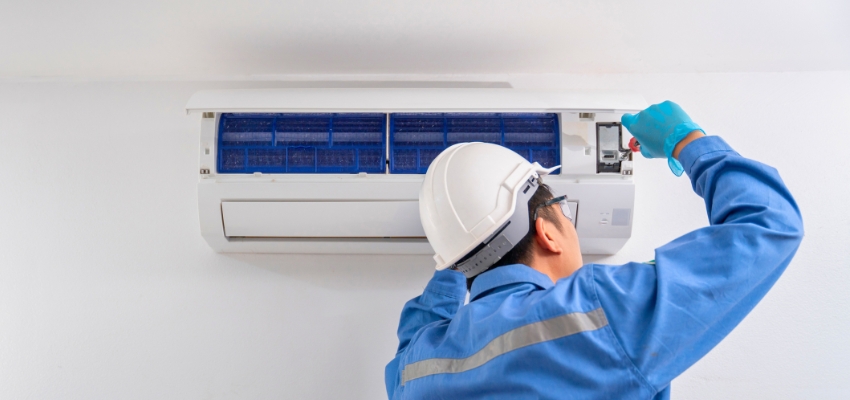
- Ask an HVAC technician. A licensed HVAC professional can identify your refrigerant type. They can do this during a routine inspection.
Why Understanding the Difference Matters for Florida Homeowners
Preventing Expensive Service Mistakes
Knowing your refrigerant type helps you understand repair recommendations. This can prevent misunderstandings during service visits.
Making Informed Replacement Decisions
Knowing the rules helps you plan for future upgrades. You won’t have to make rushed decisions during a breakdown.
Preparing for Future Refrigerant Regulations
Standards are always evolving. Staying informed helps you expect future changes. These changes might affect your maintenance costs and equipment choices.
What Should You Do if Your AC Uses Freon?
Signs Your Older System May Use R-22
Your system may use R-22 if:
- Your AC was installed before 2010
- The equipment label lists R-22.
- Previous service records reference Freon recharges.
Can You Still Recharge an R-22 System?
Yes, technicians can still service existing R-22 systems using reclaimed or recycled refrigerant when available. However, supplies are limited and often expensive.
Repair vs Replace: Factors To Consider
Consider:
- System age
- Repair frequency
- Energy efficiency
- Refrigerant availability
- Operating costs
When Replacement Makes More Sense
Replacing your system may be the more practical choice if:
- It’s approaching the end of its expected lifespan.
- Repairs are becoming frequent.
- Energy bills continue to rise.
- R-22 service costs outweigh the benefits of keeping the unit
Signs Your AC May Have a Refrigerant Problem
Common warning signs include:
- Weak cooling performance. Your home struggles to reach the preferred temperature.
- Warm air from the vents. The system runs, but the airflow feels lukewarm.
- Ice buildup on evaporator coils. Low refrigerant levels can sometimes cause coils to freeze.
- Hissing or bubbling sounds. These noises may indicate refrigerant leaks.
- Higher-than-normal energy bills. An ineffective system working harder to cool your home can increase utility costs.
Common Misconceptions About Refrigerant and Freon
“Freon and Refrigerant Mean Exactly the Same Thing”
Freon is a type of refrigerant sold under a brand name, not the universal term for all refrigerants.
“Freon Is Illegal to Own”
Owning and operating an R-22 system is not illegal. Existing systems can continue functioning as long as they remain operational.
“Any Refrigerant Works in Any AC”
Different refrigerants need compatible equipment. Using an incorrect refrigerant can damage your system.
“Refrigerant Needs Routine Refills”
Air conditioners operate as sealed systems. Refrigerants should not require regular refilling. If levels are low, a leak may be present and should be professionally repaired.
Frequently Asked Questions
Is Freon still used in air conditioners?
Older systems may still use R-22 Freon, although new production and imports have been phased out. Most modern systems use alternative refrigerants.
What refrigerant do new AC systems use instead of Freon?
Many newer systems use R-410A. However, the industry is adopting alternatives with lower global warming potential. These include refrigerants like R-454B and R-32.
Can you replace Freon with another refrigerant in an existing AC system?
Sometimes. Technicians can retrofit certain systems, while others require them to modify or replace equipment. We recommend getting a professional evaluation.
How do I know if my AC uses Freon or another refrigerant?
Check the manufacturer’s label on the unit. You can also review your system’s documentation. Alternatively, ask an HVAC technician to identify the refrigerant for you.
Is Freon more harmful to the environment than modern refrigerants?
Older Freon formulations such as R-22 contribute to ozone depletion. Newer refrigerants do not weaken the ozone layer. However, some still contribute to global warming.
Is it expensive to repair an AC system that uses Freon?
It can be. Repair costs can be higher because R-22 is not readily available. Systems using modern refrigerants are often cheaper to fix.
Should I replace my AC if it still uses Freon?
Not necessarily. The decision depends on your system’s age, efficiency, repair history, and the cost of maintaining it.
Refrigerant vs Freon: The Knowledge Every Homeowner Should Have
Understanding the “refrigerant vs freon” comparison is important. It helps homeowners make educated decisions about their air conditioning. Knowing what type of refrigerant your system uses is important. It helps you navigate changing regulations and evaluate repair costs. You can also plan for a replacement when necessary. Is your air conditioner old or new? Staying informed helps protect your investment and maintain year-round comfort.
Need expert help with your air conditioning system? Turn to Fahrenheit AC. With over 25 years of experience, we offer expert AC and heating solutions to keep your home or business comfortable year-round.