Walking into a cool home after baking in the humid Florida heat feels like magic. One moment you are sweating, and the next, you are enveloped in crisp, refreshing air. While it might feel like wizardry, the process behind that cooling relief is actually a fascinating feat of science and engineering.
Understanding your HVAC system doesn’t require a degree in physics. In fact, knowing the basics can help you make smarter decisions about maintenance, energy bills, and upgrades. At Fahrenheit AC, we believe an informed homeowner is a happy homeowner. Let’s pull back the curtain on the machinery that keeps your home comfortable.
It’s Not About Adding Cold, It’s About Subtracting Heat
The most common misconception about air conditioning is that the machine pumps “cold air” into your house. In reality, cold does not exist as a physical substance; cold is simply the absence of heat.
Think of your home like a sponge soaked in water, but instead of water, it is soaked in heat. To dry the sponge, you have to squeeze the water out. To cool your home, your air conditioner must absorb the heat energy from inside and move it outside.
This is the core answer to “how does an air conditioner work”: it is a heat transfer machine. It captures heat from your living room and releases it into the outdoor air, leaving the remaining air inside cooler and more comfortable.
The Secret Ingredient: Refrigerant
This heat transfer dance relies on a chemical compound called a refrigerant. You might know it by brand names like Freon or Puron, though the industry is shifting toward newer, eco-friendly options in 2026.
Refrigerant is special because it changes from a liquid to a gas (and back again) very easily. This ability to change states is what allows it to carry heat.
- When it evaporates (turns to gas): It absorbs heat.
- When it condenses (turns to liquid): It releases heat.
Your AC system pumps this chemical through a closed loop of copper coils, constantly changing its state to move heat from point A (your couch) to point B (your backyard).
The 4 Main Components of an AC
To move this refrigerant around, your central air system relies on four key players. We can think of them like parts of the human body.
1. The Evaporator Coil (The Sponge)
Located inside your home (usually in the attic or closet), this coil is cold to the touch. Warm air from your house blows over these cold coils. The refrigerant inside absorbs the heat from the air, turning from a liquid into a gas. This is where the actual “cooling” happens.
2. The Compressor (The Heart)
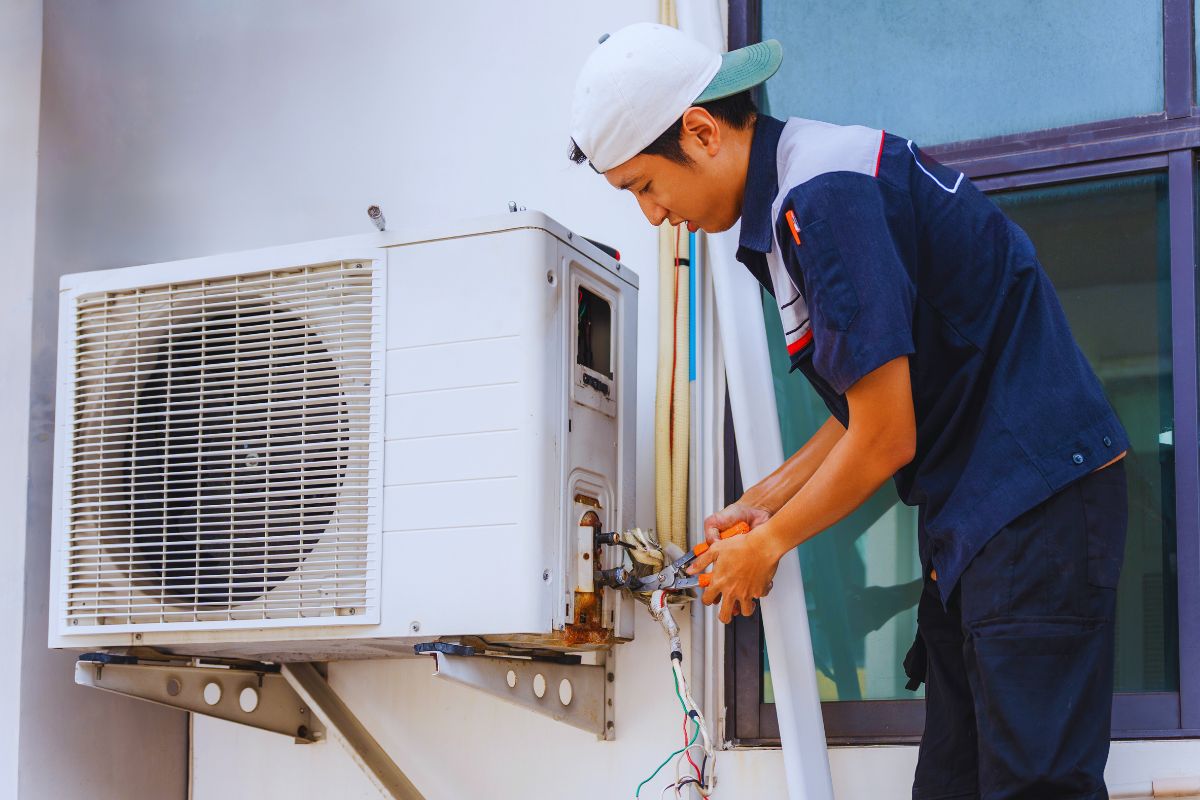
Located in the outdoor unit, the compressor does exactly what its name suggests: it squeezes the refrigerant gas. This increases the pressure and temperature of the gas, preparing it to release the heat it absorbed from inside. It is the engine that keeps the refrigerant flowing.
3. The Condenser Coil (The Release Valve)
Also located in the outdoor unit, this coil looks like a radiator. The hot, high-pressure gas flows into these coils. A fan blows outside air across them, dissipating the heat into the outdoors. As the heat leaves, the refrigerant turns back into a liquid.
4. The Expansion Valve (The Regulator)
Before the liquid refrigerant can go back inside to absorb more heat, it needs to cool down. The expansion valve restricts the flow of fluid, causing the pressure to drop instantly. This rapid pressure drop makes the refrigerant extremely cold, ready to enter the Evaporator Coil and start the cycle all over again.
The Cooling Cycle
Now that we know the players, let’s watch the game in action. Here is the step-by-step journey of how an air conditioner works to cool your home:
- Thermostat Signals: Your thermostat senses the room is warmer than your set temperature and signals the system to turn on.
- Air Intake: The indoor blower fan pulls warm air from your rooms through the return ducts and passes it through an air filter (catching dust and pollen).
- Heat Absorption: The warm air passes over the cold Evaporator Coil. The refrigerant inside absorbs the heat. Simultaneously, moisture in the air condenses on the cold coil, dehumidifying your home.
- Distribution: The now-cool air is blown back into your rooms through the supply ducts.
- Compression: The refrigerant, now a warm gas, travels outside to the Compressor, where it is pressurized and heated up.
- Heat Release: The hot gas travels through the Condenser Coil. The outdoor fan blows air over the coil, releasing the heat into the atmosphere. The refrigerant cools down and becomes a liquid.
- Cooling Down: The liquid travels back to the Expansion Valve, chills rapidly, and enters the indoor coil to repeat the process.
What’s New in 2026?
The basic physics of air conditioning haven’t changed much since Willis Carrier invented the modern AC in 1902. However, the technology surrounding it has advanced drastically. If you are looking at systems in 2026, you will notice a few major differences compared to units from a decade ago.
Smarter Brains
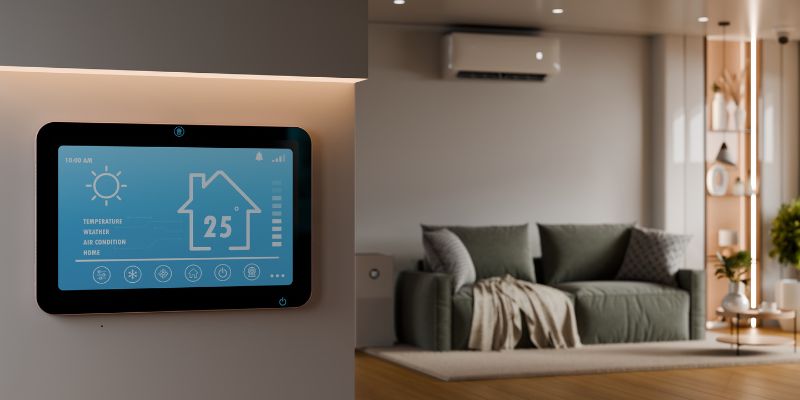
Modern systems use AI-driven thermostats and sensors. Instead of just turning on and off, these systems “learn” your home’s heating patterns. They can adjust cooling power in tiny increments to maintain perfect humidity and temperature without wasting energy.
New Refrigerants
You may hear technicians mention “A2L” refrigerants. These are the new standard for 2026. They are designed to be much friendlier to the environment than older fluids. They transfer heat efficiently but break down faster in the atmosphere if they leak, reducing their global warming potential.
Higher Efficiency Standards (SEER2)
The industry has moved to stricter testing standards known as SEER2. This means a unit labeled “high efficiency” today is significantly better at saving energy than a “high efficiency” unit from ten years ago. It’s like comparing a modern hybrid car to a gas-guzzler from the 90s, you get the same destination (comfort) using much less fuel (electricity).
Why Professional Installation Matters
While the concept is simple, the execution is complex. An air conditioner is a finely tuned sealed system. If the refrigerant levels are off by just a few ounces, or if the airflow is restricted by poor ductwork, efficiency plummets and parts wear out faster.
This is where the Fahrenheit AC team comes in.
At Fahrenheit AC, we don’t just install boxes; we engineer comfort. Serving our Florida community, we understand that an AC here works harder than almost anywhere else in the country. We ensure your system is sized correctly, charged perfectly, and maintained meticulously. Whether you need a seasonal tune-up to keep those coils clean or advice on the latest 2026 energy-efficient models, we are your local partners in staying cool.
Keep Your Cool
Knowing how an air conditioner works takes the mystery out of the machine. It helps you understand why changing your filter matters (airflow is everything!) and why that outdoor unit needs space to “breathe” (to release that heat!).
By respecting the science of heat transfer and keeping up with regular maintenance, you ensure your home remains a sanctuary against the heat, no matter how high the mercury rises outside.