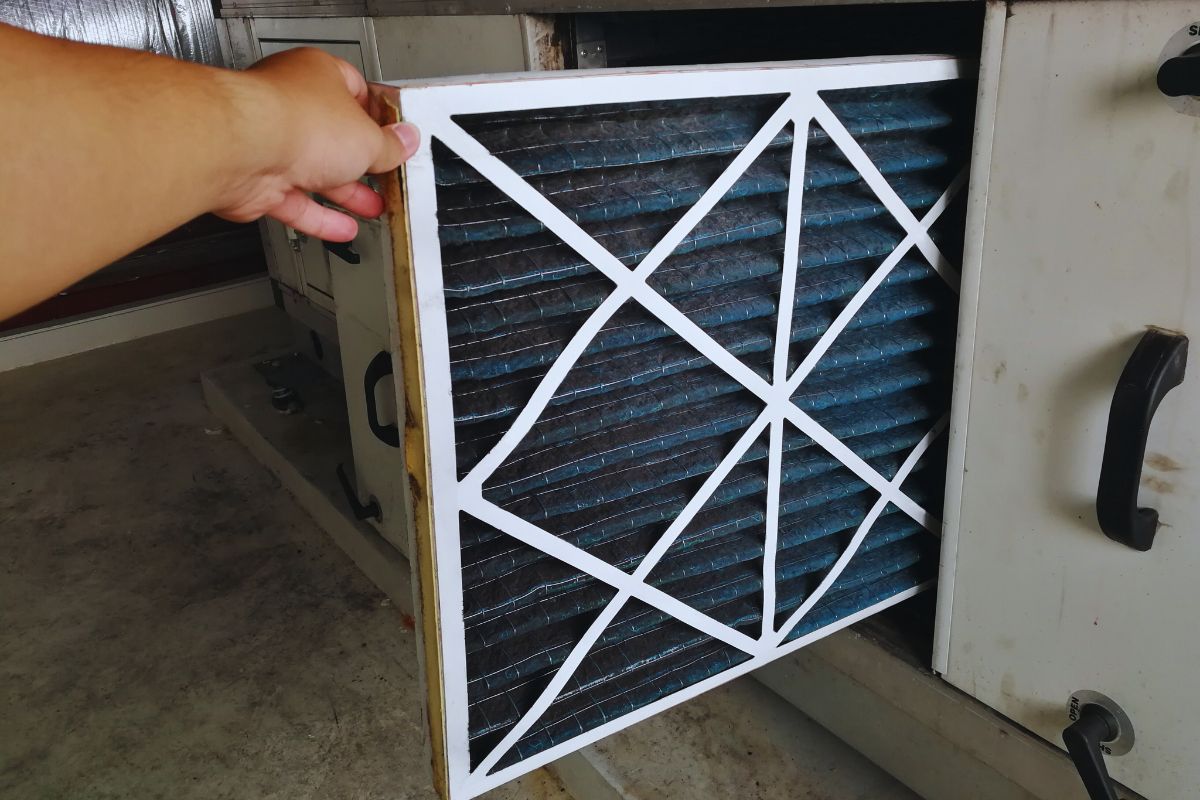
Walking into the hardware store for a new air filter can feel surprisingly complicated. You face an entire aisle filled with boxes of different sizes, thicknesses, and ratings. It’s easy to grab one that looks right, only to get home and discover it’s just a fraction too big or small to fit. Getting the air filter size right is one of the most simple yet crucial tasks you can perform for your home’s HVAC system.
An incorrect filter size can lead to reduced efficiency, poor air quality, and even damage to your air conditioner. This guide will walk you through exactly how to measure your air filter size, ensuring you purchase the right one every time. Let’s clear the air and make this simple chore a success.
Why Your AC Filter Size Is So Important
You might be thinking, “Does it really matter if it’s a little off?” The short answer is yes, it matters a lot. A filter that doesn’t fit correctly allows air to bypass it completely. Dust, pollen, pet dander, and other debris can slip through the gaps and enter both your HVAC system and the air you breathe.
Here’s why a perfect fit is non-negotiable:
- Protects Your HVAC System: Unfiltered particles can build up on essential components like the evaporator coil and blower motor. This accumulation forces the system to work harder and can lead to expensive repairs or a shorter lifespan.
- Improves Indoor Air Quality: The filter’s job is to trap contaminants. If air is going around it instead of through it, those particles are just circulating through your home.
- Boosts Energy Efficiency: A filter that is too large or small can block proper airflow, making your system strain to heat or cool your home. A correctly sized filter helps your unit operate smoothly, which can help keep your energy bills down.
- Maintains Proper Airflow: Consistent and unrestricted airflow is essential for your home’s comfort. The right filter ensures air moves as it should, helping your system distribute conditioned air evenly.
How to Measure Air Filter Size: A Step-by-Step Guide
Finding your air filter’s dimensions is usually a quick and easy process. In most cases, the information you need is printed right on the filter itself.
Step 1: Turn Off Your System and Locate the Filter
Before you do anything, turn off your thermostat. This prevents the system from running and pulling in unfiltered air while the filter slot is empty. Next, find your air filter. It’s typically in one of two locations:
- In the return air vent: This is the large grate, usually on a wall or ceiling, that pulls air into the system. You can often open it using small latches. The filter sits directly behind this grate.
- In the air handler unit: The filter may also be in a dedicated slot on the indoor unit of your AC system (the air handler). This unit is often found in a closet, attic, or garage. Look for a small door or slot cover, sometimes labeled “Filter.”
Step 2: Check the Old Filter for Printed Dimensions
Carefully slide the old filter out of its slot. Look at the cardboard frame. In nearly all cases, the manufacturer prints the filter’s dimensions directly on the side. You will see three numbers listed, such as “20 x 25 x 1.” These numbers represent the Length x Width x Thickness.
This printed size is known as the nominal size. It’s a rounded, easy-to-remember number for shopping. The filter’s actual size is usually a fraction of an inch smaller to ensure it slides into the slot easily. For example, a 20 x 25 x 1 filter might actually measure 19.5 x 24.5 x 0.75 inches. You only need the nominal size when buying a replacement.
Step 3: Measure Manually If No Size Is Listed
If the old filter has no dimensions printed on it, or if you think the previous owner used the wrong size, you’ll need to measure it yourself. Grab a tape measure and record three measurements of the filter slot or the old filter:
- Length (L)
- Width (W)
- Thickness/Depth (D)
Measure from edge to edge and round up to the nearest whole inch. For example, if you measure 15.5 inches by 24.5 inches by 0.75 inches, you need a 16 x 25 x 1 filter. Measuring the slot itself is the most reliable method if you’re unsure about the previous filter.
Common Mistakes to Avoid
Getting the right size is straightforward, but a few common slip-ups can send you back to the store.
- Forcing a Filter That’s Too Big: Never bend or cram a filter into the slot. A bent frame creates gaps, defeating the purpose of the filter.
- Using a Filter That’s Too Small: A filter that is too small will sit loosely in the housing, allowing unfiltered air to stream around it.
- Ignoring the Thickness: The third number (thickness or depth) is just as important. Most systems use a standard 1-inch thick filter. If your system is designed for a 1-inch filter, a 4-inch filter will not fit. Upgrading to a thicker filter requires a professionally installed deep-pleat filter housing.
- Forgetting to Check the Airflow Arrow: Every filter has an arrow printed on its frame. This arrow must point in the direction of the airflow, toward the air handler and away from the return duct. Installing it backward can reduce its effectiveness.

Expert Help for Your HVAC Needs
Sometimes, you might run into a unique situation. Your system may require an uncommon dimension that isn’t available at big-box stores, or you may be interested in upgrading your system to use a higher-efficiency media filter. This is where professional guidance can make all the difference.
Here at Fahrenheit AC, we specialize in keeping HVAC systems across Central Florida running perfectly. Our expert technicians can help you source custom-sized filters or perform the necessary modifications to upgrade your system for thicker, longer-lasting media filters. If you’re ever unsure about your filter or want to improve your home’s air quality, our team provides trusted maintenance, repair, and installation services.
Conclusion
Changing your air filter is a simple task that pays huge dividends in system longevity, energy efficiency, and indoor air quality. By following these steps, you can confidently find and install the correct filter every time. Locate the filter, check the dimensions on the old one, or measure the slot to get the right length, width, and thickness. A perfect fit ensures your system is protected and your air stays clean