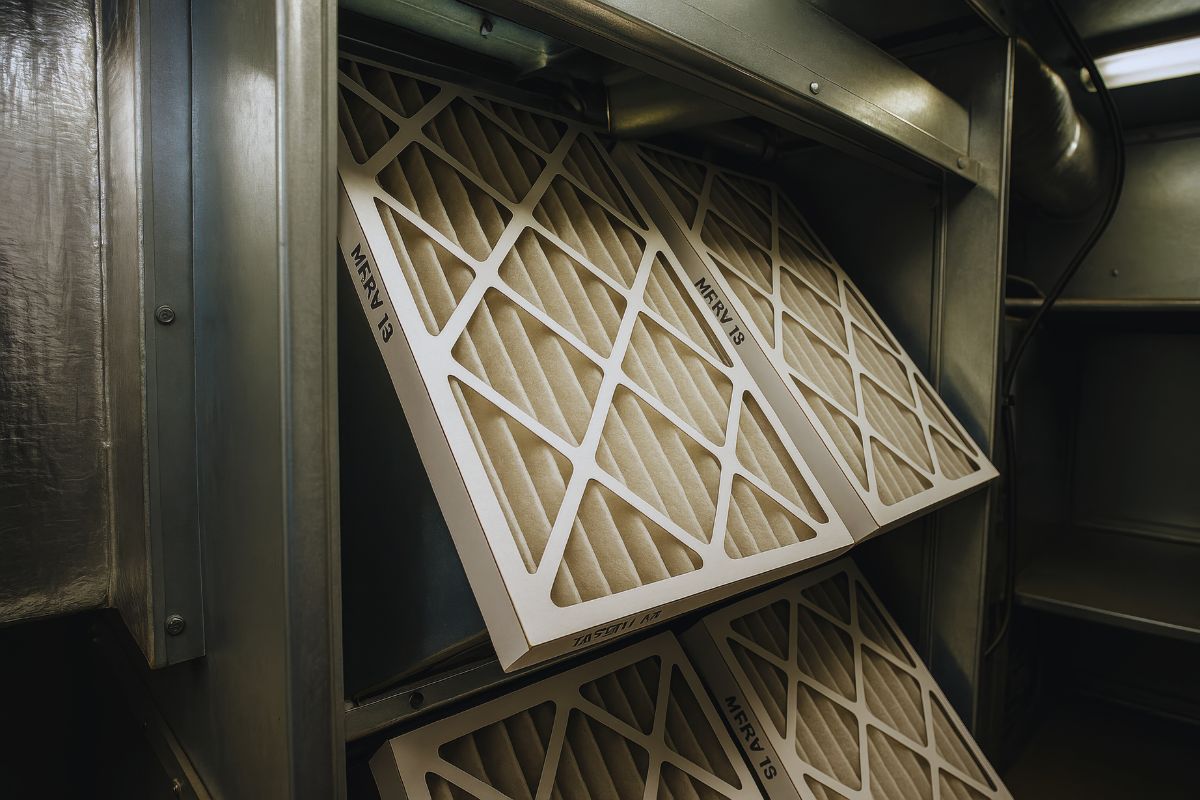
When you walk down the aisle to buy a new air filter for your HVAC system, the alphabet soup of ratings can be overwhelming. You’ll see terms like MERV, FPR, and even MPR. It’s natural to wonder which one matters most for your home’s air quality and your system’s health. As HVAC professionals, we see this confusion all the time.
The choice between MERV vs FPR is a common question, and getting it right can make a big difference. This guide will cut through the noise, explain what these ratings mean in simple terms, and help you choose the perfect filter for your needs.
Air Filter Ratings at a Glance
Before we dive deep, let’s quickly summarize the two main rating systems you’ll encounter. Think of it like this:
- MERV (Minimum Efficiency Reporting Value): This is the industry standard created by the American Society of Heating, Refrigerating and Air-Conditioning Engineers (ASHRAE). It’s a precise, universal scale from 1 to 16 that measures how well a filter captures particles from 0.3 to 10 microns. You’ll see it used by most filter manufacturers and HVAC professionals.
- FPR (Filter Performance Rating): This system was developed by The Home Depot for filters sold in their stores. It uses a simpler color-coded scale from 4 to 10. The goal is to make shopping easier for their customers by grouping filters into “good,” “better,” and “best” categories.
While both aim to measure filter effectiveness, MERV is the technical standard, and FPR is a retail-specific guide.
What is a MERV Rating?
The MERV rating is the most reliable and widely accepted benchmark for air filter ratings. Developed by ASHRAE, an independent engineering society, the MERV scale gives you a detailed look at a filter’s performance.
The scale ranges from 1 to 16 for residential filters (and up to 20 for commercial applications like hospitals). A higher number means the filter is more effective at capturing smaller airborne particles. It specifically tests a filter’s ability to trap particles in three size ranges:
- Large particles (3.0–10.0 microns): Pollen, dust mites, and carpet fibers.
- Medium particles (1.0–3.0 microns): Mold spores, pet dander, and fine dust.
- Small particles (0.3–1.0 microns): Bacteria, smoke, and some virus carriers.
Because it’s a standardized system, you can confidently compare a MERV 8 filter from one brand to a MERV 8 from another. This consistency is why HVAC technicians like us rely on the MERV scale to make recommendations.
What is an FPR Rating?
The FPR rating is a proprietary system created by The Home Depot to simplify the filter-buying process for its customers. The scale runs from 4 to 10 and is often paired with a color scheme to guide you toward a specific level of filtration.
- FPR 4-5 (Good): Captures large particles like dust and lint. Roughly equivalent to MERV 6–8.
- FPR 6-7 (Better): Captures medium particles like pet dander and mold spores. Roughly equivalent to MERV 8–11.
- FPR 8-10 (Best): Captures the smallest particles, including smoke, bacteria, and allergens. Roughly equivalent to MERV 11–13.
It’s important to remember these conversions are approximate. An independent body like ASHRAE doesn’t regulate the Home Depot FPR system, so performance can vary slightly. It’s a helpful guide for in-store shopping but lacks the universal precision of the MERV scale.
MERV vs FPR: A Head-to-Head Comparison
So, which rating should you follow? The best choice depends on your priorities, your home environment, and where you shop. Let’s break down the practical differences in this merv vs fpr showdown.
- Airflow and System Compatibility: This is the most critical factor. A higher-rated filter is thicker and denser, which can restrict airflow. While a MERV 13 or FPR 10 filter captures more contaminants, it also makes your HVAC system work harder to pull air through. This can strain the fan motor and reduce efficiency, especially in older systems. A MERV 8 or FPR 5 offers a great balance of filtration and airflow for most standard residential units.
- Allergen and Smoke Sensitivity: If someone in your home suffers from allergies, asthma, or respiratory issues, you’ll want a higher level of filtration. A filter in the MERV 11-13 range (or FPR 7-10) is designed to trap pet dander, mold spores, smoke, and other microscopic irritants that lower-rated filters miss. This is also the ideal range for homes in areas prone to wildfire smoke.
- Cost and Availability: Generally, the higher the rating, the more expensive the filter. MERV-rated filters are available from a wide variety of online retailers and HVAC suppliers, often at a lower cost for a comparable rating. FPR-rated filters are primarily found at The Home Depot. If you prioritize convenience and are already at the store, FPR is a simple choice. If you want more options or to buy in bulk, shopping by MERV rating online might be more economical.
How to Make the Right Choice
Feeling clearer? Here’s a simple framework to guide your decision:
-
- Default to MERV for Precision: If you want to compare different brands, buy filters online, or follow a professional’s recommendation, always use the MERV rating. It’s the universal language of filtration.
- Use FPR for In-Store Simplicity: If you’re at The Home Depot and need a filter now, the FPR scale is a perfectly fine guide. Just know that an FPR 7 is a solid choice for most homes, balancing performance and airflow.
- When to Choose a Higher Rating (MERV 11+ or FPR 7+):
-
- You have pets.
- Someone in the house has allergies or asthma.
- You live in an area with high pollution or seasonal wildfire smoke.
- You simply want the cleanest possible indoor air quality and have a modern HVAC system that can handle it.
Frequently Asked Questions (FAQs)
Is an FPR 7 the same as a MERV 11?
They are roughly equivalent. Both are designed to capture particles like pet dander and mold spores. However, since MERV is a standardized test and FPR is a proprietary rating, their performance isn’t identical. Think of them as being in the same ballpark.
Does a higher-rated filter always restrict airflow?
Yes, to some degree. The denser the filter media, the harder your system’s fan has to work. For most modern HVAC systems, a MERV 11 filter is perfectly fine. A MERV 13 might cause some strain, especially if not changed regularly. If you have an older system or are concerned about airflow, a MERV 8 is a safe and effective choice.
What rating is best for allergies, pets, or wildfire smoke?
For these situations, you need a filter that can capture very small particles. We recommend a minimum of MERV 11 (or FPR 7). For maximum protection, a MERV 13 (or FPR 10) is ideal, as it’s rated to trap smoke, bacteria, and even some viruses. It’s a key part of the MPR vs MERV discussion as well, where higher-end MPR filters also target these tiny particles.
How often should I change my air filter?
It depends on the filter type and your home environment.
- Basic 1-inch filters (MERV 6-8): Every 60-90 days.
- Higher-rated 1-inch filters (MERV 11+): Every 60 days, as they clog faster.
- Homes with pets or smokers: Check every 30-45 days.
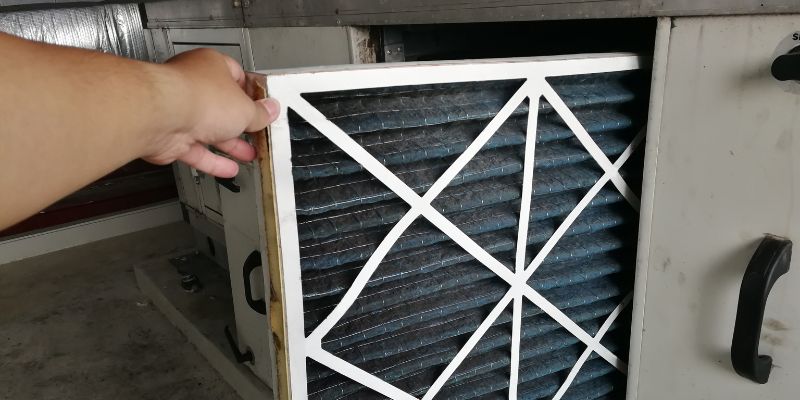
Your Partners in Clean Air in Florida
As HVAC technicians at Fahrenheit AC, we help Florida homeowners breathe easier every day. Choosing the right filter is a crucial first step, but it’s only one part of maintaining excellent indoor air quality and system efficiency. Your climate, home’s age, and specific HVAC unit all play a role.
If you’re unsure which filter your system can handle or want to ensure your unit is running at peak performance, we’re here to help. Our team provides expert filter consultations, comprehensive HVAC maintenance, and professional installations across the region. We can assess your system and recommend the perfect balance of filtration and airflow for your home.
Ready for cleaner air and a healthier HVAC system? Schedule your service with Fahrenheit AC today by visiting us at fahrenheitacfl.com.
The Clear Winner for Your Home
When it comes to the MERV vs FPR debate, the MERV rating is the clear winner for accuracy and universal use. It provides a reliable, standardized way to compare HVAC filters across all brands.
While the FPR system is a handy guide for quick shopping trips, MERV gives you the power to make a truly informed decision for your home’s health. By choosing the right filter and changing it regularly, you’re not just protecting your HVAC system, you’re investing in the air you and your family breathe every day.