An air purifier is a fantastic tool for improving the air you breathe at home. By trapping dust, pollen, pet dander, and other tiny pollutants, it helps keep your indoor environment clean and healthy. But your purifier is only as good as its filter. Over time, that hardworking filter gets clogged, and if you don’t change it, the machine can’t do its job effectively.
So, how do you know when it’s time for a new air purifier filter? While some models have a handy indicator light, many don’t. As HVAC experts, we at Fahrenheit AC have seen what happens when filters are left for too long.
To help you stay on top of it, we’ve put together this guide on the seven key signs that your filter needs to be replaced. Keeping an eye out for these clues will ensure you continue to get the fresh, clean air you deserve.
The 7 Signs Your Air Purifier Filter Needs Replacing
1. Your Allergy or Asthma Symptoms Are Flaring Up
One of the most common reasons people invest in an air purifier is to find relief from allergies or asthma. If you notice that your usual symptoms, like sneezing, coughing, watery eyes, or difficulty breathing, are returning or getting worse, a clogged filter could be the culprit.
When an air purifier filter is full, it can no longer effectively capture airborne irritants like pollen, dust mites, and pet dander. Instead, these particles remain circulating in your home, triggering your symptoms. If you’re suddenly reaching for your inhaler or allergy medication more often, it’s a strong signal that your filter has stopped doing its job.
What to do: Check your filter immediately. If it looks dirty, replace it. Track your symptoms afterward to see if they improve.
2. You Notice a Decrease in Airflow
Your air purifier works by pulling air in, passing it through a filter, and releasing clean air back into the room. When the filter is clean, air moves through it easily. But as it fills with trapped particles, airflow becomes restricted.
You can often feel this change. Place your hand near the purifier’s air outlet. Do you feel a strong, steady stream of air? If the flow feels weak or significantly less powerful than you remember, the filter is likely clogged. The motor is working harder to pull air through a blocked surface, which not only reduces performance but can also strain the unit itself.
What to do: Turn off and unplug the unit. Remove the filter and hold it up to a light. If you can’t see any light passing through, it’s definitely time for a replacement.
3. The Air Purifier Is Making More Noise
Have you noticed your once-whisper-quiet air purifier is now making a loud humming or whining sound? This is another symptom of restricted airflow. When the filter is clogged, the fan motor must work overtime to draw air through it. This extra effort forces the motor to run at a higher speed, creating more noise.
Ignoring this sound can lead to bigger problems. An overworked motor can burn out, potentially ruining the entire appliance. A noisy purifier is a stressed purifier, and the cause is almost always a dirty filter.
What to do: Replace the filter to relieve the strain on the motor. The unit should return to its normal, quieter operating sound once a clean filter is installed.
4. There’s a Bad or Musty Smell Coming from the Unit
Your air purifier should produce clean, neutral-smelling air. If you detect a musty, dusty, or generally unpleasant odor coming from the unit, it’s a clear sign the filter needs attention.
Filters, especially carbon filters, are designed to absorb odors from pets, cooking, and smoke. Over time, these filters become saturated. A clogged filter can also trap moisture, creating a breeding ground for mold or mildew, which releases its own unpleasant, musty smell. Instead of cleaning the air, the purifier starts circulating these bad odors back into your room.
What to do: Immediately replace all filters, including the carbon filter if your unit has one. This should eliminate the source of the odor.
5. The Filter Looks Visibly Dirty or Gray
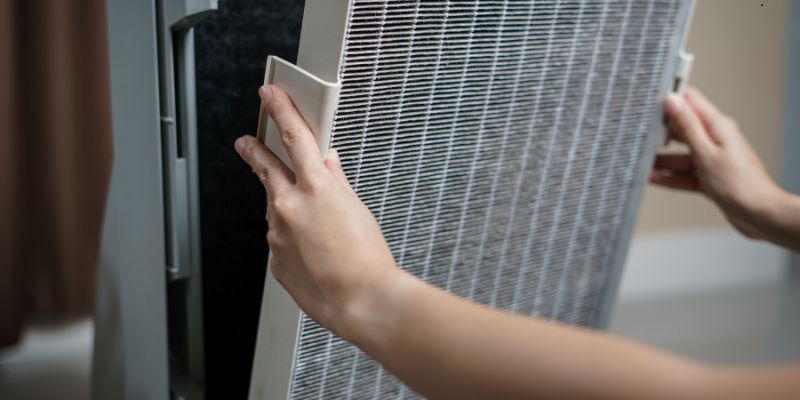
This one is simple but effective: use your eyes. Most manufacturers recommend checking your filter once a month, and for good reason. A visual inspection is one of the easiest ways to gauge its condition.
A new filter is typically a crisp white or off-white. A used filter will be covered in a layer of dust, hair, and other particles, often appearing gray, brown, or black. Don’t just glance at it—take it out and look closely. If the surface is caked in grime, it’s long past its prime. For units with a washable pre-filter, make sure to clean it according to the manufacturer’s instructions to extend the life of the main filter.
What to do: If the filter is dark with dirt, replace it. Set a monthly calendar reminder to perform a quick visual check.
6. The “Change Filter” Indicator Is On
Many modern air purifiers come equipped with a built-in “change filter” indicator light. This feature takes the guesswork out of maintenance. These indicators work in one of two ways: some operate on a simple timer based on the manufacturer’s recommended replacement schedule, while more advanced models use sensors to detect a pressure drop caused by a clogged filter.
While incredibly helpful, don’t rely on the light alone. Factors like high pollution levels, pet dander, or cigarette smoke can clog a filter faster than the default timer setting. It’s always wise to combine this automated reminder with regular visual checks.
What to do: When the light comes on, order and install a new filter. Remember to reset the indicator after replacement so it can accurately track the new filter’s lifespan.
7. Dust and Dirt Are Accumulating Faster
Is dust settling on your furniture and floors more quickly than usual, even though you’ve been running your air purifier? This is a sign that your unit isn’t capturing particles effectively anymore.
A clean air purifier filter is excellent at trapping airborne dust before it has a chance to settle. When the filter becomes saturated, it can no longer hold onto new particles. As a result, you’ll notice more dust around your home, defeating one of the key purposes of having an air purifier in the first place.
What to do: Replace the filter. After installing a new one, you should notice a significant reduction in the amount of dust that accumulates on surfaces.
Understanding Air Purifier Filter Lifespans
Not all filters are created equal. Your air purifier may have several types, each with a different job and a different lifespan. Here’s a quick breakdown:
- Pre-filters: These are the first line of defense, capturing large particles like pet hair, lint, and visible dust. Many are washable and reusable.
– Lifespan: Clean every 30 days and replace if damaged. - HEPA Filters: The heart of most purifiers, true HEPA filters are certified to capture 99.97% of airborne particles as small as 0.3 microns, including dust, pollen, mold spores, and some bacteria.
– Lifespan: Typically 6 to 12 months, depending on usage and air quality. - Activated Carbon Filters: These filters are designed to trap gases, odors, and volatile organic compounds (VOCs) from cooking fumes, pets, and smoke.
– Lifespan: Generally 3 to 6 months, as they become saturated more quickly than HEPA filters.
Remember, these are just general guidelines. If you live in an area with high pollution, have pets, or if someone in your home smokes, you will need to replace your filters more frequently.
Need Help with Your Home’s Air Quality?
At Fahrenheit AC, we’re passionate about helping Florida residents breathe easier. While maintaining your portable air purifier is a great step, achieving truly clean air often requires a whole-home solution. Our certified technicians can assess your home’s unique needs and recommend the best systems, from advanced filtration integrated into your existing HVAC to dedicated whole-home air purifiers.
We can help you choose, install, and service the right air quality products for your family’s health and comfort. If you’re in the Southwest Florida area and ready to take control of your indoor air quality, contact Fahrenheit AC today.
Frequently Asked Questions (FAQs)
Can I wash and reuse my HEPA filter?
No. Unless the manufacturer explicitly states that the filter is “washable” or “permanent,” you should never wash a standard HEPA filter. Washing can damage the delicate web of fibers that allows it to trap microscopic particles, rendering it ineffective and potentially leading to mold growth. Always replace disposable HEPA filters.
What happens if I don’t change my air purifier filter?
If you don’t change the filter, it will become completely clogged. This will drastically reduce the purifier’s effectiveness, cause the motor to overwork (which can lead to permanent damage), decrease your home’s air quality, and potentially circulate bad odors.
Does a more expensive filter mean it’s better?
Not necessarily. The most important factor is compatibility. Always use the filter type recommended by your air purifier’s manufacturer. Using a third-party or incorrect filter can void your warranty, reduce performance, and even damage the unit. Stick with genuine HEPA or carbon filters designed for your specific model.
Conclusion
Your air purifier is a vital part of maintaining a healthy home, but it requires regular attention to perform at its best. By learning to spot the signs of a clogged air purifier filter, from increased allergy symptoms and noise to reduced airflow and visible dirt, you can ensure your unit operates efficiently.
Regularly checking and replacing your filters is a small task that pays huge dividends in air quality and peace of mind. If you’re ready to explore more permanent solutions for clean air, don’t hesitate to contact the experts at Fahrenheit AC for a professional consultation.