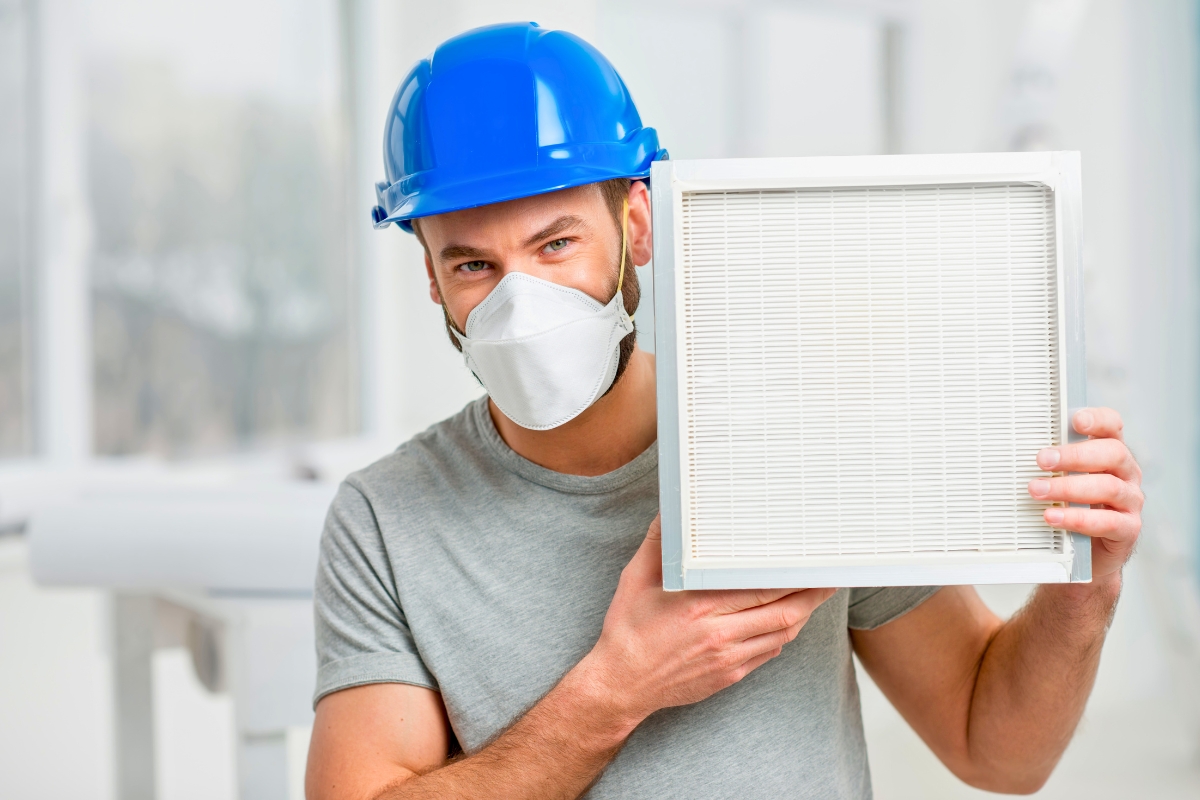
Changed your filter last year? For many Florida homeowners, this is not often enough. Air conditioners run almost year-round, so HVAC filters collect dust, pollen, pet dander, and other airborne debris faster than in milder climates. When a filter clogs, airflow drops, your HVAC system works harder to keep your home comfortable, and energy costs rise.
Most HVAC professionals suggest changing your filter every 30 to 90 days, but the ideal schedule depends on your home and how your HVAC system is used. Filter type, household conditions, and system runtime all affect how quickly a filter needs replacing.
Here’s how often to change HVAC filters based on your home, the type of filter you use, and the signs that it’s time for a replacement.
How Often To Change HVAC Filters
The Standard Recommendation: Every 30 to 90 Days
For most homes, replacing a standard HVAC filter every 30 to 90 days is a good starting point. ENERGY STAR recommends checking your filter monthly, especially during heavy heating or cooling, and replacing it at least every three months. As debris builds up, airflow becomes restricted, forcing your HVAC system to work harder to maintain comfort.
Why There’s No One-Size-Fits-All Schedule
Think of the 90-day recommendation as a starting point, not a strict rule. A filter’s lifespan depends on its thickness, how often your HVAC runs, the number of people and pets in your home, and your indoor and outdoor air quality.
In Florida, where air conditioners run nearly year-round, filters become dirty faster than in homes that use cooling seasonally. That is why checking your filter every month is more useful than relying on the replacement date on the package.
How Often To Replace HVAC Filter Based on Your Home
Homes Without Pets
If your home has no pets and no one in your household has allergies, a standard 1-inch filter will typically last 60 to 90 days under normal operating conditions.
Homes With Pets
Pet hair and dander fill filters more quickly. Homes with one pet should replace the filter every 60 days, while households with multiple pets may need a new filter every 30 to 45 days.
Homes With Allergy or Asthma Sufferers
When someone in your home has allergies or asthma, replacing the filter every 20 to 45 days helps reduce dust, pollen, pet dander, and other airborne particles circulating through your HVAC system.
Large Families and High HVAC Use
More occupants usually mean more dust, lint, and airborne particles. In busy households where the HVAC runs frequently, check the filter every month and replace it every 30 to 60 days.
Vacation Homes or Seasonal Properties
Because these homes have fewer occupants and less daily activity, filters collect debris more slowly. In many cases, replacing the filter every 9 to 12 months is sufficient. Still, inspect the filter before reopening the home each season.
How Often To Change AC Filter Based on Filter Type
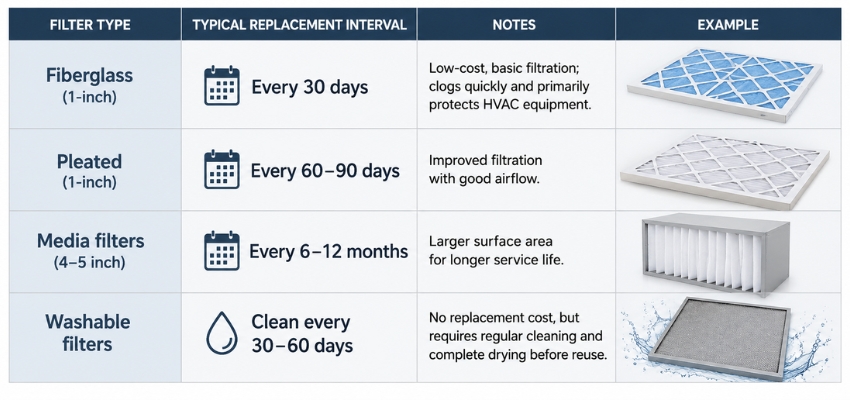
A filter’s material, thickness, and construction affect how long it lasts before replacement. The intervals below are general guidelines. Homes with pets, allergy sufferers, high dust, or heavy HVAC use may need more frequent replacements.
Fiberglass Filters
Fiberglass filters are the most affordable option and are designed primarily to protect HVAC equipment rather than significantly improve indoor air quality. Because they have a limited dust-holding capacity, they usually need replacing every 30 days.
Pleated Filters
Pleated filters provide more surface area than fiberglass filters, allowing them to capture finer particles such as dust, pollen, and pet dander. Depending on their MERV rating and household conditions, they generally last 60 to 90 days.
Media Filters
Media filters, typically 4 to 5 inches thick, are installed in whole-home filtration cabinets and can hold substantially more debris than standard 1-inch filters. Most last between 6 and 12 months, although replacement intervals still depend on system usage, indoor air quality, and the manufacturer’s recommendations.
Washable HVAC Filters
Washable filters eliminate the need for regular replacements, but they require consistent maintenance to perform effectively. Inspect them monthly and clean them every 30 to 60 days, or sooner if you have pets, allergies, or unusually dusty conditions. Always allow the filter to dry completely before reinstalling it to help prevent mold growth and maintain proper airflow.
What Affects How Often You Should Change an HVAC Filter
Filter Thickness and MERV Rating
Thicker filters generally hold more debris before needing replacement. Higher-MERV filters capture smaller airborne particles more effectively, but if your HVAC system isn’t designed for them, they can restrict airflow. Always follow your manufacturer’s recommended MERV range, which is typically between MERV 8 and MERV 13 for residential systems.
HVAC Usage Throughout the Year
The longer your HVAC system runs, the faster your filter fills with debris. Because Florida air conditioners run nearly year-round, homeowners typically need to replace filters more often than those in cooler climates.
Indoor Air Quality
Construction projects, high pollen levels, wildfire smoke, and dusty environments can all shorten a filter’s lifespan. If outdoor air quality declines or indoor dust increases, inspect your filter sooner than usual.
Pets, Dust, and Home Renovations
Shedding pets, remodeling projects, and consistently dusty conditions place additional demands on your HVAC filter. During these situations, inspect your filter more frequently than your normal schedule.
Signs Your HVAC Filter Needs Changing
- Visible dirt and dust: If the filter appears gray, heavily coated with dust, or packed with debris, it’s time for a replacement.
- Reduced airflow: Weak airflow from your vents is often one of the earliest signs that a clogged filter is restricting your HVAC system.
- Higher energy bills: As airflow decreases, your HVAC system runs longer to maintain the thermostat setting. A dirty filter can increase energy consumption by 5% to 15%.
- More dust indoors: If you’re dusting furniture more often than usual, your HVAC filter may no longer be capturing airborne particles effectively.
- Allergy symptoms: An increase in sneezing, congestion, or other allergy symptoms indoors may indicate that allergens are circulating through the system instead of being trapped by the filter.
What Happens If You Don’t Change Your HVAC Filter
Reduced HVAC Efficiency
Restricted airflow forces your HVAC system to run longer, increasing energy use and reducing overall efficiency.
Increased System Wear
Extra strain on the blower motor and other components can shorten the lifespan of your HVAC equipment.
Poor Indoor Air Quality
The EPA notes that indoor air can be significantly more polluted than outdoor air. A clogged filter allows more dust and airborne contaminants to continue circulating throughout your home.
Frozen Evaporator Coil
Severely restricted airflow can cause the evaporator coil to freeze, reducing cooling performance and potentially requiring professional service.
Costly Repairs
Ignoring routine filter changes can contribute to avoidable breakdowns. Replacing an inexpensive filter on schedule is far less costly than repairing components damaged by restricted airflow.
Frequently Asked Questions
How often should you change an HVAC filter?
Most homes should replace a standard HVAC filter every 30 to 90 days and inspect it monthly. The right schedule depends on your filter type, HVAC usage, pets, and indoor air quality.
How often should you replace an HVAC filter with pets?
Homes with pets typically need a new filter every 30 to 60 days because pet hair and dander can clog filters more quickly.
Can you wait longer than 90 days to change an HVAC filter?
For most standard filters, waiting longer than 90 days isn’t recommended. Delaying replacement can reduce airflow, increase energy costs, and place unnecessary strain on your HVAC system.
How do I know when my HVAC filter needs changing?
Check your filter for visible dirt or dust buildup, and watch for signs like weaker airflow, more dust around your home, or rising energy bills.
Does changing an HVAC filter improve energy efficiency?
Yes. A clean filter allows air to move freely through your HVAC system, helping it run more efficiently while reducing unnecessary strain on key components.
Keep Your HVAC System Running Efficiently Year-Round
There’s no one-size-fits-all schedule for replacing an HVAC filter. How often you need to inspect and replace your HVAC filter depends on how frequently your system runs and how much dust, pollen, and debris it filters. For Florida homeowners, making monthly filter inspections part of your routine is one of the simplest ways to improve energy efficiency, maintain healthy indoor air quality, and reduce unnecessary wear on your HVAC system.
If you’re unsure which filter is right for your system or how often it should be replaced, Fahrenheit AC can help. Our technicians can recommend a maintenance schedule based on your equipment, filter type, and household needs, helping your HVAC system perform reliably throughout Florida’s long cooling season. Schedule an AC maintenance visit to keep your HVAC system operating at its best.