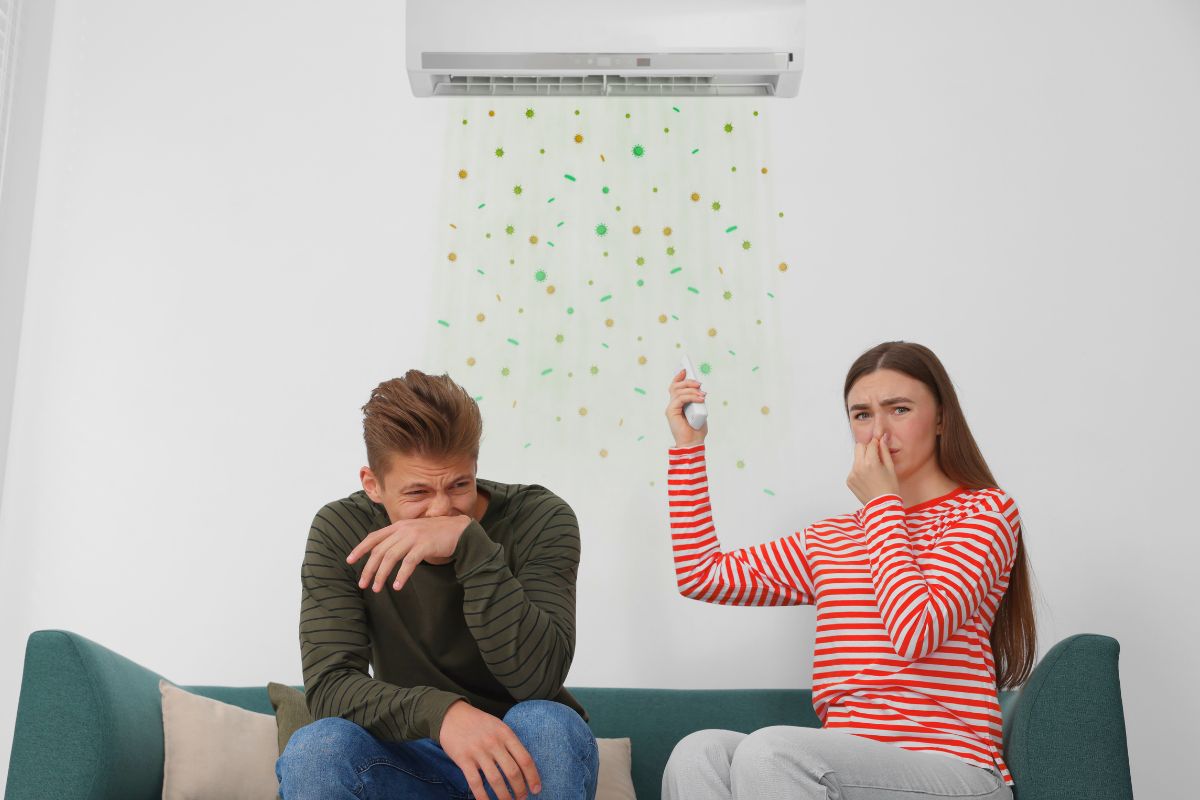
Your AC turns on, and within moments your living room smells like the inside of a gym bag. That odor has a name in the HVAC world: dirty sock syndrome.
The musty smell is associated with moisture, debris, and microbial buildup on components such as the evaporator coil. It’s more likely to occur in humid climates, including South Florida, where AC systems manage substantial moisture during a long cooling season.
If the smell keeps coming back, masking it with air fresheners won’t solve the problem. The next step is to find the cause and determine if the system needs cleaning, drainage work, maintenance, or professional inspection.
What is Dirty Sock Syndrome?
Why Does My AC Smell Like Dirty Socks?
The odor is usually musty and damp, and it may be most noticeable when the system starts after being off for a while. Some homeowners notice it mainly at startup, while others notice it throughout the cooling cycle.
“Dirty sock syndrome” isn’t a formal HVAC diagnosis. It’s a descriptive nickname technicians use for a recurring odor pattern, one that still requires inspection to identify the underlying cause. A name, in other words, isn’t an explanation.
What Causes Dirty Sock Syndrome in an AC System?
Moisture and Humidity
Condensation isn’t a flaw. It’s part of how air conditioning works. Warm, humid air passes over the cold evaporator coil, causing moisture to condense on its surface. This condensate should drain away. Problems arise when water doesn’t drain properly or the coil stays wet too long between cycles.
South Florida’s climate is a key factor. High outdoor humidity increases the moisture load an AC system must manage, and a long cooling season means the equipment runs frequently. Not every home will develop dirty sock syndrome, but moisture management is especially important in humid climates.
A Dirty Evaporator Coil
The evaporator coil absorbs heat from your indoor air, which is what actually cools your home. Air passes over the coil constantly, and over time, that airflow can deposit dust and debris on its surface. When that buildup combines with the coil’s natural moisture, conditions are created for odor and microbial growth.
Heavy buildup on the coil can interfere with heat transfer, so the issue goes beyond odor. It can also affect system performance.
Dirty Filters and Restricted Airflow
Your air filter is the first line of defense. It captures airborne particles before they reach the evaporator coil. When neglected, filters become loaded with debris and may restrict airflow. Depending on the system and filter condition, poor filtration can also let more particles reach the evaporator coil.
Replacing a dirty filter is a sensible first step when you notice an odor, but it has limits. If buildup or moisture exists elsewhere in the system, a new filter may not eliminate the odor.
Drain Pans, Condensate, and Other Moisture Problems
Every drop of water an AC removes from the air must go somewhere. The condensate drain pan collects it, and the drain line carries it away. A clogged drain, damaged pan, or drainage problem can leave standing water where it shouldn’t be.
Standing water near the indoor unit or a persistent musty smell there should be investigated promptly. Odor-control sprays and air fresheners may mask the smell but won’t fix a drainage problem.

What Are the Signs of Dirty Sock Syndrome?
Smell alone can’t tell you exactly what’s happening inside the system. A few observable patterns, however, can give you and your technician useful diagnostic clues:
A Musty or Dirty-Sock Odor from the Vents
Pay attention to timing. Does the odor appear when the AC first starts? Does it persist throughout the cycle or linger after shutdown? Does it return after you change the filter? Timing can give you and your technician useful clues, though it can’t identify the cause alone.
The Smell Keeps Coming Back After Cleaning
If the smell returns after a filter change or cleaning, note when it returns and whether other symptoms appear. This information helps a technician determine where to investigate.
Visible Moisture, Dirt, or Buildup Around the Indoor AC System
Check accessible areas like the return air grille, visible ductwork openings, and around the indoor unit. Note any water stains, grime, or visible moisture you can see without opening the equipment.
Don’t attempt to open the air handler or access the evaporator coil yourself. If the suspected source is inside that assembly, a professional inspection is the appropriate next step.
Is Dirty Sock Syndrome Dangerous?
Can Dirty Sock Syndrome Affect Indoor Air Quality?
Your AC circulates air throughout your home, so moisture or contamination inside the system can affect the air in your living space. The U.S. Environmental Protection Agency recommends controlling moisture and specifically identifies cooling coils and condensate pans as HVAC components needing attention.
An unpleasant odor alone doesn’t confirm a specific contaminant or health condition. It’s a signal worth investigating, especially for people sensitive to indoor air pollutants, but it isn’t a medical diagnosis.
Can Dirty Sock Syndrome Damage Your AC?
The odor itself doesn’t damage the AC. However, the conditions causing it can affect system performance. A dirty coil can interfere with heat transfer, a heavily loaded filter can restrict airflow, and poor condensate drainage can cause water problems if left unaddressed.
None of these issues automatically mean a major breakdown is imminent. They are maintenance problems that can compound over time and cause unnecessary wear.
How Do You Get Rid of Dirty Sock Syndrome?
Replace or Clean the Air Filter
Start with the filter because it’s the most accessible component a homeowner can check. Replace it if it’s visibly dirty, following the manufacturer’s recommendations for your system and filter type.
Clean the Evaporator Coil and Drain Pan
If the odor continues after a filter change, the evaporator coil, drain pan, and condensate system are areas for a technician to inspect. These components can be hard to access safely, and improper cleaning can damage HVAC equipment. For most homeowners, professional service is the better option.
Check the Condensate Drain and Moisture Source
Look for obvious signs of drainage trouble, such as standing water or moisture around the indoor unit. You can also check indoor humidity with a hygrometer. If humidity stays consistently high while the AC runs, have the system evaluated. A separate dehumidifier may not fix the cause of high humidity.
Address recurring moisture instead of relying on odor-control products. If moisture persists, the odor will return.
Inspect the Ductwork When Appropriate
Not every dirty-sock odor starts in the ducts. Duct cleaning may be appropriate if inspection finds contamination, substantial debris, or another duct-related problem. Treating duct cleaning as the automatic first step can leave the real source untouched.
How Can You Prevent Dirty Sock Syndrome?
Keep Your AC Filter Clean
Once the immediate odor problem is addressed, regular filter checks and timely replacements help limit debris reaching the evaporator coil.
Schedule Regular AC Maintenance
Regular professional AC maintenance can identify moisture, drainage, airflow, filtration, and coil buildup issues before they become disruptive. Fahrenheit AC’s maintenance services help homeowners stay ahead of routine AC problems.
Control Indoor Humidity
The EPA recommends keeping indoor relative humidity below 60%, with an ideal range of 30% to 50%. If your home consistently stays above that range while the AC runs normally, consider supplemental dehumidification or have a technician check if high humidity indicates a system issue.
Address AC Problems Early
Don’t ignore persistent odors, water leaks, or unexplained weak airflow. Early attention can prevent minor maintenance issues from becoming more serious.
Can Dirty Sock Syndrome Go Away on Its Own?
Sometimes the smell fades on its own. Humidity, temperature, or system operating conditions can change, making the odor less noticeable.
That doesn’t necessarily mean the problem has been resolved. If the smell returns when conditions change again, have the system inspected rather than simply waiting for it to disappear.
When Should You Call an HVAC Professional?
- The odor is persistent or keeps returning: If the smell returns after replacing the filter, or never improves in the first place, the problem may involve components you can’t safely inspect or clean yourself. That’s a good reason to have an HVAC professional inspect the system.
- You notice water, standing moisture, or a clogged drain: Recurring moisture near the indoor unit warrants attention whether or not there’s an odor. Water where it shouldn’t be can create ongoing moisture problems, so addressing drainage issues early is preferable to waiting for them to escalate.
- The AC has other performance problems alongside the smell: Odor paired with poor airflow, water leaks, high indoor humidity, or inadequate cooling is a stronger indication of a broader system issue than odor alone. Evaluating the symptoms together gives a technician more useful diagnostic information.
- You suspect mold or contamination inside inaccessible components: If you suspect contamination inside an inaccessible part of the system, don’t attempt to open the air handler yourself. A qualified HVAC technician can inspect the affected components and determine whether cleaning, repair, or further evaluation is appropriate.
Frequently Asked Questions
Is dirty sock syndrome the same as mold in an air conditioner?
No. They’re not the same thing, although the conditions behind them can overlap. Dirty sock syndrome describes an odor pattern associated with microbial activity on damp HVAC components, particularly the evaporator coil. A smell alone cannot confirm the presence, type, or extent of mold. Inspection is necessary to determine what’s actually happening inside the system.
Why does my AC smell like dirty socks when it first turns on?
The odor can be most noticeable at startup because the system begins moving air across the indoor coil and other components after a period of inactivity. Any odor-producing material or microbial buildup on those surfaces can then be carried into the airstream.
How do I get rid of the dirty sock smell from my AC?
Start with the air filter and replace it if it’s dirty. Then look for visible moisture or drainage problems around the indoor unit. If the odor continues, have the evaporator coil and drain pan professionally inspected.
Can a dirty AC filter cause dirty sock syndrome?
A neglected filter can contribute to dirty sock syndrome by becoming loaded with debris and restricting airflow. Depending on the system and filter condition, inadequate filtration may also allow more particles to reach the evaporator coil. Replacing the filter is a useful first step, but it may not eliminate an odor associated with existing coil buildup, standing water, or another moisture problem.
Does dirty sock syndrome mean I need a new AC?
Not automatically. An odor is a maintenance signal, not necessarily an equipment-failure signal. The appropriate sequence is inspection first, followed by cleaning or repair if the system is otherwise sound. Replacement should be considered only if the inspection shows that the equipment’s age, condition, repair needs, or overall economics make replacement more appropriate than cleaning or repairing the existing system.
How can I prevent dirty sock syndrome in Florida?
Consistent filter maintenance, professional AC service, proper condensate drainage, and control of indoor humidity are the main prevention measures. In Florida’s humid climate, prompt attention to moisture problems is particularly important.
Should I clean my air ducts if my AC smells like dirty socks?
Not as an automatic first response. Dirty sock syndrome is commonly associated with the evaporator coil and other indoor AC components rather than the ductwork itself. Duct cleaning may be appropriate if an inspection reveals specific contamination or debris in the ducts, but treating duct cleaning as the default solution for every musty AC smell can miss the actual source.

How to Keep Your AC Drain Line Clear and Your Home Protected
A blocked condensate drain line can cause an AC to leak, shut down, or leave standing water around the indoor unit. Knowing how to unclog AC drain line safely gives homeowners a practical first step. Simple clogs can often respond to basic maintenance, but recurring or unresolved drainage problems deserve professional diagnosis rather than another round of the same fix.
If you’re in South Florida and can’t clear a stubborn clog, or your AC keeps running into the same drainage issue, Fahrenheit AC can take a closer look and handle the repair.