
Wall Air Conditioners: What to Know Before Buying
By Rei Bayucca · Published July 30, 2026

Florida’s heat and humidity can make cooling your home a challenge. Central air isn’t always practical. Sometimes, you only need to cool one or two specific rooms. That’s where wall air conditioners come in. They’re efficient, space-saving, and reliable. Best of all, they don’t take up floor space or block your windows. Whether you need to cool a single room or multiple zones, wall air conditioners are a smart solution.
To pick the best wall air conditioner, you’ll need to think about the type, size, and features that fit your home. This article will walk you through how wall air conditioners work, what options are out there, and what to keep in mind before you buy.
What Are Wall Air Conditioners?
A wall air conditioner is a cooling system installed directly into or onto a wall instead of a window or floor-standing cabinet. Wall air conditioners come in two main types. The first is a compact through-the-wall unit, which fits into a sleeve installed in an exterior wall. The second is a wall-mounted ductless mini-split, which comprises an indoor unit connected to an outdoor condenser. Although they work differently, both provide efficient cooling without relying on central ductwork.
How Wall Air Conditioners Work
Wall air conditioners use refrigerant to remove heat from indoor air and release it outdoors. Through-the-wall models house all components in a single cabinet. Ductless mini-splits, on the other hand, separate the indoor unit from the outdoor condenser. This makes them quieter and more energy-efficient.
Wall Air Conditioners vs. Window Air Conditioners
Window air conditioners fit into a window opening and can be removed when needed, making them a good option for temporary cooling. Through-the-wall units are permanently installed in an exterior wall. This preserves your window space and gives your home a cleaner look. They also tend to operate more quietly than window units.
Wall Air Conditioners vs. Ductless Mini-Split Systems
Through-the-wall units contain all cooling components in a single cabinet. Ductless mini-splits separate the indoor and outdoor components. The compressor sits outside, making operation quieter and more energy-efficient. They also offer flexible zoned cooling so that you can control temperatures in different areas of your home independently.
Types of Wall Air Conditioners
The right type depends on your home’s layout, budget, and cooling needs.
Through-the-Wall Air Conditioners
Through-the-wall air conditioners are self-contained units installed in a wall sleeve. They’re ideal for apartments, older homes, and room additions where ductwork isn’t practical. They also typically cost less to install than ductless mini-split systems.
Wall-Mounted Mini-Split Systems
Wall-mounted mini-splits pair an indoor air handler with an outdoor condenser. Because they don’t require ductwork, they’re ideal for additions, garages, and older homes. Many models also use heat pump technology to provide both heating and cooling.
Cooling-Only vs. Heat and Cool Models
Some wall air conditioners provide cooling only, while others use heat pump technology for both heating and cooling. Cooling-only models typically cost less upfront. However, heat pump systems provide year-round comfort. They can also eliminate the need for a separate space heater.
Inverter vs. Non-Inverter Models
Traditional air conditioners cycle on and off at full power. Inverter models work differently; they adjust compressor speed to match cooling demand. This means more consistent temperatures and quieter operation. It also means lower energy bills. For Florida homeowners, inverter models are a smart, worthwhile investment.

Choosing the Right Wall Air Conditioners for Your Home
Once you’ve chosen a system type, the next step is selecting the right size and features for your home.
Select the Right BTU Size
Cooling power is measured in British Thermal Units (BTUs). As a general guideline, allow about 20 BTUs per square foot of space. For example, a 150-square-foot room typically needs around 3,000 BTUs, while a 400-square-foot room may require about 8,000 BTUs.
Avoid oversizing, which can leave the room cool but humid, or undersizing, which forces the system to run longer and use more energy.
Match the Unit to Your Room Size
Square footage is only part of proper sizing. You may need a larger unit if the room has:
-
High ceilings
Large west- or south-facing windows
A kitchen
Multiple heat-generating electronics
Consider Voltage Requirements
Most wall air conditioners use either 115V or 230V power. Smaller units (typically under 12,000 BTUs) usually run on 115V, while larger models require a dedicated 230V circuit. Check your home’s electrical system before purchasing.
Plan for Proper Installation
Proper installation affects efficiency, reliability, and warranty coverage. Through-the-wall units need a correctly sized sleeve and proper drainage. Mini-splits require refrigerant lines, electrical connections, and careful outdoor unit placement. Professional installation helps ensure long-term performance.
What to Look for in an Air Conditioner Wall Unit
Once you’ve narrowed down the right type and size, it’s time to compare the features that influence comfort, efficiency, and long-term performance. While many models offer similar cooling capacity, the details often determine how well the unit performs day after day.
Energy Efficiency Ratings
Look for a superior Seasonal Energy Efficiency Ratio (SEER) or EER rating and ENERGY STAR® certification. Higher-efficiency models use less electricity. This can reduce your operating costs over time. That’s especially true in Florida’s warm climate.
Noise Levels
Most wall-mounted air conditioners operate between 50 and 60 decibels, about the level of a normal conversation. For bedrooms or home offices, compare manufacturer noise ratings carefully. An inverter model can also deliver significantly quieter operation.
Smart Features
Wi-Fi connectivity, programmable schedules, and remote controls are all worth looking for. These smart features make it simple to control your system from anywhere. They also help you avoid running your unit when it isn’t needed, cutting down on unnecessary energy use.
Air Filtration
Many wall air conditioners include washable or multi-stage filters. These filters capture dust, pollen, and other airborne particles. Cleaning the filter regularly helps maintain airflow, efficiency, and indoor air quality.
Warranty and Reliability
Don’t just look at warranty length. Consider the manufacturer’s reputation too. Check whether replacement components are easy to find. Also, look into local service support options. A well-established brand can make repairs and warranty claims much easier if problems arise.
Pros and Cons of Wall Air Conditioners
Advantages
Wall air conditioners save floor space, preserve window views, and provide efficient room-by-room cooling. They can also reduce energy use by cooling only occupied areas instead of the entire home. Many models include inverter technology and improved filtration for quieter, more efficient operation.
Potential Drawbacks
Wall air conditioners require more involved installation than portable or window units. Through-the-wall models need a permanent wall opening. Mini-splits require refrigerant lines and must be installed by a professional. Because they cool individual zones, larger homes may need multiple units for whole-home comfort.
How to Choose the Best Wall Mounted Air Conditioner
The best wall mounted air conditioner is one that’s properly sized for your space, matches your cooling needs, and fits your budget.
Consider Your Cooling Needs
Consider which rooms need cooling and whether you also want heating. A through-the-wall unit works well for a single room, while a mini-split is often a better choice for cooling multiple spaces.
Compare Features and Efficiency
Don’t just compare prices. Look at energy efficiency, noise levels, and filtration too. Smart features and warranty coverage also matter. A more efficient unit may cost more upfront, but it can save you money in the long run. A more efficient unit may cost more upfront but can lower operating costs over time.
Decide Whether Professional Installation Is Right for You
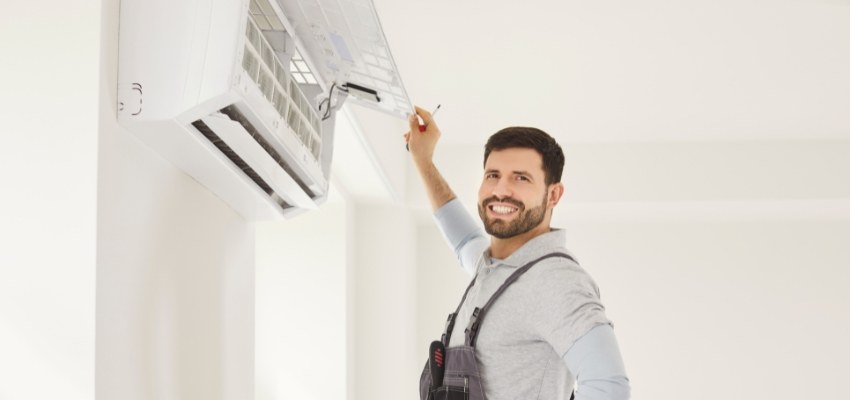
Having a professional install your system makes sure it’s the right size, works with your electrical setup, drains properly, and has the right amount of refrigerant. It also helps your system run better and keeps your warranty valid.
Frequently Asked Questions
What is the difference between a wall air conditioner and a window AC?
A through-the-wall air conditioner is installed permanently into a sleeve built into an exterior wall. A window air conditioner, on the other hand, sits inside a window opening and can usually be removed when it’s no longer needed. Wall units preserve natural light and window views. They also tend to operate more quietly and offer a more finished appearance. However, they do require a more involved installation process.
What size wall air conditioner do I need?
As a general guideline, allow about 20 BTUs of cooling capability per square foot of space. However, room size isn’t the only factor. Several factors can affect the cooling capacity you need. These include sun exposure, ceiling height, and insulation. Heat generated by appliances or electronics can also play a role. If you’re unsure, an HVAC professional can perform a load calculation to suggest the appropriate size.
How long do wall air conditioners last?
With proper installation and routine maintenance, most wall air conditioners last 10 to 15 years. Several factors affect how long a wall air conditioner lasts. These include equipment quality, frequency of use, upkeep habits, and local climate. Regular filter cleaning or replacement is important. Scheduling professional service also helps. Together, these habits keep the system running efficiently for years to come.
Can you replace an existing air conditioner wall unit?
Yes, provided the existing wall sleeve and electrical requirements are compatible with the new unit. An HVAC professional can confirm compatibility before installation.
How much does it cost to install a wall air conditioner?
Installation costs vary depending on several factors. These include the type of unit, its cooling capacity, and whether new electrical work or wall modifications are needed. Through-the-wall units are generally less expensive to install than ductless mini-split systems. However, actual costs will depend on your home’s construction and specific installation requirements. A licensed HVAC contractor can provide the most accurate estimate after evaluating your space.
Can you install a wall air conditioner yourself?
Some through-the-wall units are marketed for DIY installation. However, professional installation is generally recommended. It ensures the unit is correctly sized and safely connected to your electrical system. Proper installation also optimizes performance and protects your warranty coverage. A licensed HVAC professional should always install mini-split systems.

Choosing the Right Wall Air Conditioner for Your Home
Picking the right wall air conditioner means choosing the right type, BTU size, and energy-saving features. Both through-the-wall units and ductless mini-splits have their own benefits. No matter which one you pick, getting the right size and having it installed by a professional are key for reliable and efficient performance in your home.
Thinking about adding a wall air conditioner to your Florida home? Fahrenheit AC can help. We’ll help you choose the right system and take care of the installation, so you can enjoy lasting comfort with our expert support.

Rei Bayucca is the lead writer for the Fahrenheit AC blog, covering air conditioning, heating, and indoor air quality for South Florida homeowners.
Need a hand with your AC?
Fahrenheit AC serves Broward, Palm Beach, and Miami-Dade counties.
(954) 793-8610Request ServiceNeed a hand with your AC?
Fahrenheit AC serves Broward, Palm Beach, and Miami-Dade counties.
(954) 793-8610Request Service