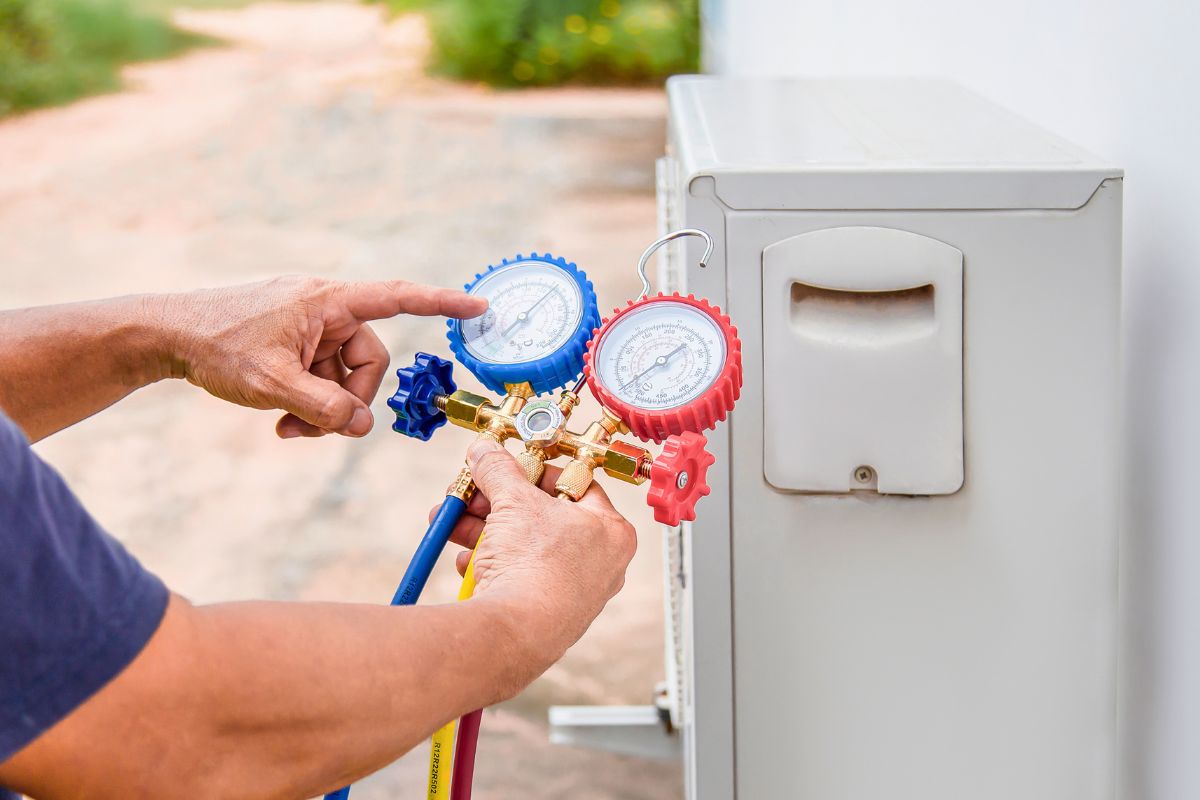
An AC refrigerant leak can be dangerous, but the risk depends on the refrigerant, how much escapes, and the ventilation. In a normally ventilated home, a small leak is more likely to affect cooling and energy use than cause an immediate health emergency. A substantial release in a confined or poorly ventilated space requires more caution.
If your AC runs longer than usual, struggles to cool your home, or makes an unfamiliar hissing sound, don’t ignore it. This article explains the warning signs of an AC refrigerant leak, whether refrigerant is toxic, what happens if a leak goes unrepaired, and when professional help is needed.
Is an AC Refrigerant Leak Dangerous?
A refrigerant leak can be an AC performance problem or a safety concern, depending on the circumstances. In a normally ventilated home, a small leak may first show as poor cooling, longer run times, rising energy costs, or increasing strain on the system rather than an immediate health emergency.
The situation is more serious in a small, enclosed, or poorly ventilated space. A substantial release can allow refrigerant concentrations to build, creating health or flammability hazards depending on the refrigerant. ASHRAE classifies refrigerants by toxicity and flammability, so the specific refrigerant in your AC system matters.
Is Refrigerant Toxic?
There’s no simple yes-or-no answer for every refrigerant. Different refrigerants have different safety classifications, and their effects depend on the substance, its concentration, and exposure conditions.
In a confined space, a substantial release can create an asphyxiation hazard if refrigerant concentration reduces oxygen available for breathing. The risk depends on the refrigerant, amount released, and the size and ventilation of the space.
What matters is which refrigerant is involved, how much escaped, and whether the area is adequately ventilated.
Treating every refrigerant as equally dangerous or equally harmless can lead to the wrong response.
Is a Freon Leak Dangerous?
Many homeowners use “Freon” as a general term for AC refrigerant. Technically, Freon is a brand name for particular refrigerants, not a universal name for all refrigerants used in air conditioners.
That distinction matters because older and newer systems use different refrigerants with different safety characteristics and handling requirements. ASHRAE’s current classifications reflect these differences in toxicity and flammability.
If you suspect a leak, have a professional identify the refrigerant your system uses. Knowing the refrigerant helps determine how the system should be serviced and what precautions apply.
What Are the Signs of an AC Refrigerant Leak?
Refrigerant leaks don’t always make themselves obvious. More often, you’ll notice a change in your AC’s performance. These signs can point to a leak, but none confirm one alone.
Your AC is Not Cooling Properly
Weak cooling is a noticeable warning sign. If your air conditioner runs long but struggles to reach the thermostat setting, low refrigerant could be a cause.
Warm air from the vents on a hot South Florida afternoon is a reason to investigate but isn’t proof of a refrigerant leak. Dirty filters, airflow restrictions, electrical problems, and failing components can cause similar symptoms.
Ice is Forming on the AC or Refrigerant Lines
Ice on the indoor coil or refrigerant lines may Ice on the indoor coil or refrigerant lines may seem strange when it’s hot outside but can occur when refrigerant levels are low.
Changes in system pressure and temperature can cause moisture to freeze on cold surfaces.or other equipment problems, so don’t assume that ice automatically means you have a refrigerant leak. If you see significant icing, turn the system off and have it inspected rather than continuing to run it.
You Hear Hissing or Other Unusual Sounds
Refrigerants escaping through a small opening can produce a hissing sound. Bubbling or other unusual sounds near refrigerant lines or components may also warrant investigation.
Sound alone isn’t enough to diagnose a leak. Air conditioners make various normal noises, so treat an unfamiliar hiss as a clue, not a definitive diagnosis.
Your AC Runs Longer or Energy Bills Increase
A system with low refrigerant may run longer because it isn’t transferring heat effectively. That extra runtime can increase electricity use.
An increase in your energy bill doesn’t automatically mean refrigerant is leaking. Hotter weather, changing electricity rates, aging equipment, and other problems can have the same effect. Consider an unexplained increase a reason to investigate, not a diagnosis.

What Causes an AC Refrigerant Leak?
Most refrigerant leaks develop because a component, connection, or tubing has deteriorated or been damaged. Identifying the cause matters because simply adding refrigerant won’t prevent the problem from returning.
Corrosion and Normal Component Wear
Over time, coils, tubing, fittings, and connections can deteriorate. In South Florida, moisture and coastal conditions contribute to corrosion of exposed metal components.
A small leak may develop gradually, making it easy to miss until cooling performance declines.
Damaged Components or Connections
Physical damage can create a leak. Refrigerant lines may be bent or punctured, while coils, valves, and fittings can be damaged or cracked.
Damage can occur during other work around the property, from impacts, or during previous service or installation. The exact source must be identified before proper repair.
Installation or Component Problems
Not every refrigerant leak results from an old AC system. Loose connections, installation problems, or defective components can cause refrigerant loss much earlier than expected.
If a relatively new system develops a leak, finding the cause is important rather than assuming it just needs another refrigerant charge.
What Happens If an AC Refrigerant Leak Is Left Unrepaired?
A refrigerant leak won’t resolve itself. As refrigerant escapes, cooling performance declines and the system may experience additional strain.
- Reduced cooling and efficiency. Refrigerant plays a central role in transferring heat out of your home. When the system loses refrigerant, cooling declines. You may notice warmer rooms, longer cooling cycles, or an AC that struggles to keep up during periods of extreme heat. Comfort is often the first noticeable consequence.
- Increased stress and potential AC damage. Continuing to operate a system with a refrigerant problem can put additional stress on its components, including the compressor. Leaving the underlying problem unresolved can also turn a refrigerant repair into a larger equipment problem if additional components are affected. Prompt diagnosis won’t guarantee a small repair, but it can prevent the system from continuing to operate with an unresolved fault.
- Environmental impact. Refrigerants released into the atmosphere can have environmental consequences, which vary by refrigerant. Different refrigerants have different environmental and safety characteristics, so the impact should not be generalized. Repairing a leak keeps the refrigerant contained within the system and prevents continued release.
What Should You Do If You Suspect an AC Refrigerant Leak?
If your AC shows several signs of a refrigerant problem, don’t try to diagnose or repair it by adding refrigerant yourself.
Stop Ignoring the Warning Signs
It’s tempting to keep running an underperforming AC, especially during a South Florida summer. But if the system struggles to cool, ices up, or behaves abnormally, continuing to run it won’t fix the problem.
If you see significant icing or other unusual behavior, turn the system off and arrange for a professional inspection.
Avoid DIY Refrigerant Handling
Refrigerant handling requires specialized equipment, training, and safety procedures. Attempting to locate, recover, repair, or recharge a system without proper knowledge and equipment can cause injury, equipment damage, or improper refrigerant release.
Leak detection, repair, recovery, and recharging should be handled by a qualified HVAC technician with the appropriate equipment and any required refrigerant-handling certification.
Have the Leak Professionally Diagnosed and Repaired
The goal isn’t just to add more refrigerant. The leak source must be located and fixed first.
Adding refrigerant to a system with an active leak may temporarily restore cooling, but it doesn’t solve the underlying problem. A qualified technician can diagnose the system, identify the leak, determine the appropriate repair, and recharge the system correctly when needed.
When Is an AC Refrigerant Leak an Emergency?
Most residential refrigerant leaks are primarily an HVAC repair issue, but a suspected substantial release in a confined or poorly ventilated space deserves immediate caution. The safest approach is to avoid investigating the leak yourself and leave the affected area if you suspect significant exposure.
Suspected Significant Refrigerant Exposure
The potential risk increases when a refrigerant release occurs in a small, enclosed area with limited ventilation. If you suspect a substantial release in a confined space, don’t stay there to investigate.
Move to fresh air and avoid further exposure. Do not enter the affected space to locate the leak or attempt to ventilate it if doing so would expose you to the suspected release. Once you’re safely away, seek appropriate professional assistance.
Serious Symptoms After Suspected Exposure
If someone develops concerning symptoms after suspected refrigerant exposure, move to fresh air and seek appropriate medical or emergency assistance. Severe breathing difficulty, loss of consciousness, or rapidly worsening symptoms require immediate medical attention.
When there’s a potential exposure concern, deal with the person’s safety first and the AC repair second.
Frequently Asked Questions
Are refrigerant leaks dangerous to breathe?
The risk depends on the refrigerant, concentration, and ventilation. A substantial release in a confined space can be hazardous, so leave the area and get fresh air if significant exposure is suspected.
Can an AC refrigerant leak make you sick?
Significant refrigerant exposure can be harmful, particularly in a confined or poorly ventilated space. If you develop concerning symptoms after suspected exposure, move to fresh air and seek medical care if symptoms are serious, persistent, or worsening.
Is it safe to sleep in a room with a refrigerant leak?
If you suspect an active refrigerant leak in a bedroom, don’t continue using the room as normal until the situation has been assessed. Move to a well-ventilated area and arrange for the AC to be inspected. A suspected release in an enclosed sleeping space warrants extra caution because you may not recognize a developing exposure while asleep.
Can I run my AC if it has a refrigerant leak?
It’s better to turn the system off if you suspect a refrigerant leak, particularly if the AC is icing up, struggling to cool, or behaving abnormally. Continuing to operate a system with low levels of refrigerant can reduce performance and place additional stress on its components.
Does a refrigerant leak smell?
You shouldn’t rely on smell to detect a refrigerant leak. Some refrigerants may have an odor, while others may have little noticeable smell. Poor cooling, icing, unusual sounds, and other performance changes are more useful clues that something may be wrong with the system.
Can I fix an AC refrigerant leak myself?
No. Leak detection, refrigerant recovery, repair, and charging require appropriate equipment and technical knowledge. A DIY attempt can create safety risks, damage the system, or result in improper refrigerant release.
Can you just add refrigerant without fixing the leak?
Adding refrigerant without repairing an active leak doesn’t address the underlying problem. The system will continue losing refrigerant, and the cooling problem can return. The leak should be located and repaired before the system is recharged.
Final Takeaway: Don’t Ignore a Suspected Refrigerant Leak
An AC refrigerant leak isn’t automatically a household emergency, but it shouldn’t be ignored. In a normally ventilated home, the first signs are often poor cooling, longer run times, or changes in energy use. A substantial release in a confined or poorly ventilated space requires greater caution.
If you suspect a leak, don’t rely on symptoms alone and don’t attempt a DIY recharge. The refrigerant type and source of the leak need to be identified so the system can be repaired properly.
If your AC is showing signs of a refrigerant leak, Fahrenheit AC can diagnose the problem and determine the appropriate repair. With more than 25 years of experience servicing AC systems across South Florida, our team can help restore reliable cooling. Contact Fahrenheit AC to schedule an AC repair.